Jean Monnet Quotes
Arsenal of Democracy
Monnet began to use the exact phrase in Mid 1940. He almost certainly had read Sherwood’s earlier, similar phrase {624748}. However so had Presidential Aid Harry Hopkins who thought that it would be a good phrase for President Roosevelt to use to “brand” the activity of the United States. So diplomatically, Monnet was asked not to use the phrase any more, and he acceded to the request. At the end of the year, in a famous radio address, FDR used the phrase {624747}, and it has been associated with him ever since.
Jean Monnet, 1888-1979, French Statesman, Phrase used in the middle of 1940
Sourced by: Eigen's Political and Historical Quotations

This was the address where FDR used the “arsenal of democracy” phrase which became so famous. A similar phrase was used in May by Robert E. Sherwood--{624748}. Then Jean Monnet began to use the exact phrase in Mid 1940--{624746}. He almost certainly had read Sherwood’s earlier, similar phrase. However so had Presidential Aid Harry Hopkins who thought that it would be a good phrase for President Roosevelt to use to “brand” the activity of the United States. So diplomatically, Monnet was asked not to use the phrase any more, and he acceded to the request. At the end of the year, FDR gave his address with this quotation.

This was the earliest version of a variant of the great WWII propaganda phrase, “Arsenal of Democracy”. See --{624746} and {624747} for quotations related to this famous phrase.
After Japan attacked Pearl Harbor, we declared war on Japan. Germany then declared war on the United States, and America was in the fight. But the earlier policy had been to provide weapons, food, and supplies.

The founder was Charles E. Coughlin, 1891-1979, a demagogic Catholic Priest who drafted the principles and invited others to join him. Hundreds of thousands did in this organization which began in idealism, and ended in scandal and hate mongering, so much so that Father Coughlin was ordered off the radio and out of politics by the Catholic Church. The National Union in 1936 had morphed into the Union Party which ran Presidential candidates in the 1936 election. In this principle there were two purposes: First to have the wealthy sacrifice something in time of war. Historically wealth could keep a man from the draft if he so wanted. Second, when the company went to war the argument went it was the rich who could profit who had more political influence and could make the war. This way, they would pay a high price and might oppose war. Many of Coughlin’s followers were pro-German and wanted to keep the country out of the European war.

“Arsenal of Democracy” is the famous FDR phrase whereby America was able to provide weapons for the other democracies to fight Fascism. At the time, the United States had the greatest manufacturing capability of the world. When Gingrich made this quotation, much manufacturing that had been done in America had moved offshore. However, one area that did not move offshore was military weapons manufacturing where the United States manufacturing capability was thriving but America was the largest arms manufacturer in the world and exported much of its weapons. This quotation is an example of a political technique called “conflation.” Gingrich took an area where there was legitimate concern about the nation’s loss of manufacturing and implied that the problem was affecting our military and defense capability as well which was not do at all. However, while most Americans knew of the manufacturing job loss, they did not know that the defense manufacturing was the strongest in the world. So they became even more alarmed at the problem of general manufacturing loss.


In the American Civil War, civilian weapons production first became a factor in the outcome of a war. In WWI, it became a significant factor. And in WWII it was THE MAJOR factor when America became the “Arsenal of Democracy”. At one point, a single Ford factory was producing an entire B24 (our heaviest) bomber every single hour on a 24/7 schedule—over 600 every month.

No one knew whether he was doing this as a joke, as a protest about the role of money in politics, or if he was seriously thinking of running for office or any combination of the three.


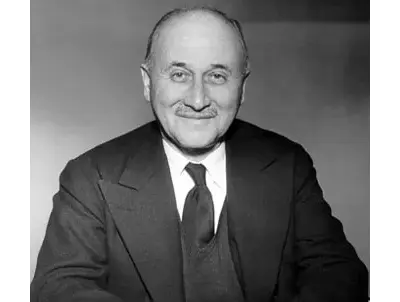
- Born: November 9, 1888
- Died: March 16, 1979
- Nationality: French
- Profession: Négociant
Jean Omer Marie Gabriel Monnet was a French entrepreneur, diplomat, financier, administrator, and political visionary. An influential supporter of European unity, he is considered as one of the founding fathers of the European Union.
