Philip Carteret Quotes
… any one having a good musket... and six months' provisions
Philip Carteret, 1635-1682, English Colonial Governor of New Jersey, Requirements for immigrating colonists getting free farmland in Elizabethtown of the Colony of New Jersey
Sourced by: Eigen's Political and Historical Quotations

At the time, English ordinary citizens were not allowed to have firearms, but exception was made for the colonists. “Stands” were y-shaped sticks that the gun would rest on as the weight was about 20 pounds.

Even allowing for a certain amount of exaggeration, it is clear that there were many Americans who were personally armed in this period.


Because of the classic historical anti-Semitism and discrimination, Jews were barred from land ownership and as a result few were farmers or had agricultural experience in their families. They were tradesmen, artisans, professionals in Europe. So amongst Jews and non Jews alike the notion of Jews settling the land of Palestine and farming it or trapping, the way the Boers had in South Africa or the French in Canada, was not a very credible image. The Zionists, realizing this potential weakness, placed strong emphasis on agriculture, developed the agricultural kibbutz concept and encouraged Jews to become farmers. The effort was so successful that almost all the leading early Zionist immigrants to Palestine became farmers. When independence came to Israel, the Jewish agriculture was more productive than most of that in Europe and almost on a par with small farms in the United States. The Israelis were known for “making the desert bloom.

It would be more than a decade before the phrase “well regulated militia” would be added into the Constitution as the 2nd Amendment of the Bill of Rights. This resolution was the last of several passed at this meeting by which Maryland endorsed resistance to the British. So these resolations would have been widely distributed throughout the colonies and known by the leaders. In 1788 Alexander Hamilton Published Federalist 29 which also used the phrase. (See {588393}.) Then on September 25, 1789, the Congress proposed the Bill of Rights and the 2nd Amendment using the same key phrase, “well regulated militia.” Whether the drafters of the 2nd Amendment got the phrase from Hamilton’s Federalist 29 or from the Maryland Resolutions is not known but Hamilton’s was much more current. Did he get the phrase from Maryland? Did Congress get it from him? Did Maryland originate the phrase or was there an earlier use that influenced the Maryland drafters? At this point no one is sure, but the phrase is critical to the meaning of the 2nd Amendment because the Supreme Court has repeatedly held that the Second Amandment does not apply to individuals but only to the State’s right to bear arms within the “well regulated militia” and not as individual citizens. The right is that of the State government and that is why a state can control guns including banning them if they choose. So an individual in America does not have the constitutional right to bear arms. He may have a state constitutional right but in other states he may not use a gun in certain places and may not possess certain types of guns like hand guns which are illegal in New York, Washington DC and some other places.

In order to develop the country she invited immigrants to come to Russia and many did at the same time that England was encouraging immigrants to develop the lands and resources of America


While the militia had very few arms, Van Rensselaer had no military training and commanded a critical army because of his political connections—common at the time. After he botched the Battle of Queenston Heights he returned to politics but his military failure dogged him for the rest of his career. The quotation is yet another that illustrated the myth of all Americans armed and ready to fight for the nation. There was no gun culture then, and guns were expensive and a minority of Americans owned them. In this case less than 20 percent of the American militia owned a gun. And Congress would just not at the time spend the money for weapons.

There were military procurement problems in almost every war in which the United States has been engaged.
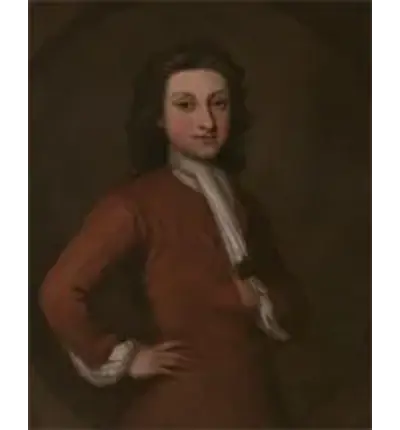
Philip Carteret, Seigneur of Trinity was a British naval officer and explorer who participated in two of the Royal Navy's circumnavigation expeditions in 1764–66 and 1766–69.
