Frantz Fanon Quotes
And it is clear that in the colonial countries the peasants alone are revolutionary, for they have nothing to lose and everything to gain. The starving peasant, outside the class system is the first among the exploited to discover that only violence pays. For him there is no compromise, no possible coming to terms; colonization and decolonization a simply a question of relative strength.
Fanon, Frantz. The Wretched of the Earth. Translated by Constance Farrington, Grove Press, 1963, p. 61.

In 1927 there was a Peasant Uprising in the Hunan Province of China. Young Mau went there and wrote a report. Mao and other young communist leaders had a much more acute appreciation of sloganeering than their older revolutionary comrades. Even into the 3rd millennium, the same “Down with Imperialism” slogan could be heard in many part of the world, long after the Soviet Union collapsed and China and become capitalistic.


And as the leader of the exploited, after his revolution he became a dictator himself, albeit a very popular one amongst most Cubans.

In the fall of 1885 twenty-two labor unions joined together in a central, militant organization.
In 1927 there was a Peasant Uprising in the Hunan Province of China. Young Mau went there and wrote a report.
There had been a revolution against the Qing Dynasty and an attempt to establish a republic. Wang, the spokesperson, quickly wrote an article in the Atlantic Monthly one of the most prestigious American publications. He minimized the degree of bloodshed, but by Chinese standards of civil unrest where over 20 million people had been killed in previous discords, this was relatively benign. It was a de facto military coup which also involved political assassinations which he carefully avoided mentioning, and just a few months after the publication of this article a second revolution broke out and this version of the Chinese Republic was very short lived.


Lev Davidovich Bronstein


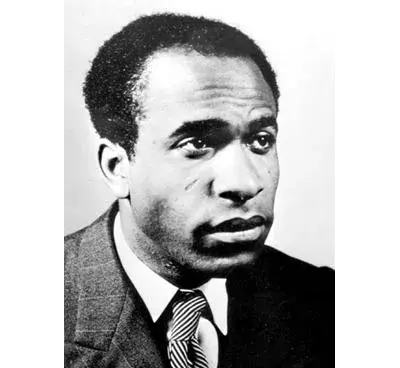
Frantz Omar Fanon, also known as Ibrahim Frantz Fanon, was a French West Indian psychiatrist and political philosopher from the French colony of Martinique (today a French department). His works have become influential in the fields of post-colonial studies, critical theory and Marxism. As well as being an intellectual, Fanon was a political radical, Pan-Africanist, and Marxist humanist concerned with the psychopathology of colonization and the human, social, and cultural consequences of decolonization.
