Thomas Paine Quotes
An army of principles can penetrate where an army of soldiers cannot.
Paine, Thomas. Agrarian Justice. W. Adlard, 1797, p. 12.


1st Baron Macaulay. When there were riots or violent demonstrations in those days, the demonstrators would break up the street pavements and use the stone blocks to throw at police or soldiers. Change, reform and revolution has often occurred in England, the United States and several other democracies without riots or violent demonstrations. The Civil Rights movement demonstrations in the South often turned violent, but the violence never came from the protestors, but those opposed whose violence was condoned by the police often produced by the police themselves.


Reagan, Ford, Bush, Clinton


Generally after civil wars there have been extensive reprisals and trials of the winning side against the losing one. Lincoln was determined that this pattern not be followed as the bloody war was coming to an end. Ironically, Andrew Johnson, Lincoln’s successor and a Southerner, was, together with some of the Radical Republicans, in favor of trying many of the Southern leaders for treason and rebellion. Lincoln’s view however and that of the moderate members of Congress prevailed. However, the Southern Whites generally would not comply with the Constitutional Amendments and laws regarding the role of the Negro, and Johnson was very sympathetic to their racism which led to a conflict between Johnson and Congress.
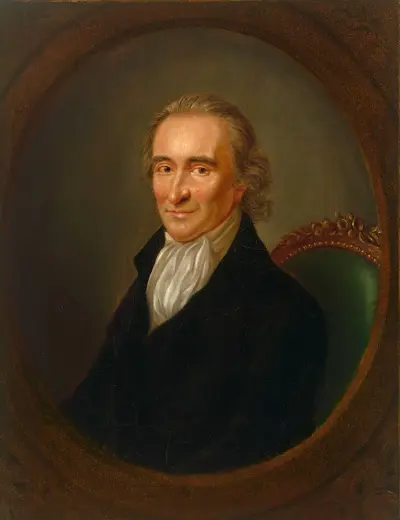
Thomas Paine was an English-born American political activist, philosopher, political theorist, and revolutionary. He authored Common Sense (1776) and The American Crisis (1776–1783), the two most influential pamphlets at the start of the American Revolution, and helped inspire the patriots in 1776 to declare independence from Great Britain. His ideas reflected Enlightenment-era ideals of transnational human rights. Historian Saul K. Padover described him as "a corsetmaker by trade, a journalist by profession, and a propagandist by inclination".
