Thomas Babington Macaulay Quotes
We have obtained concessions of inestimable value, not by beating the drum, not by ringing the tocsin, not by tearing up the pavement, not by running to the gunsmith’s shops to search for arms, but by the mere force of reason and public opinion.
1st Baron Macaulay. When there were riots or violent demonstrations in those days, the demonstrators would break up the street pavements and use the stone blocks to throw at police or soldiers. Change, reform and revolution has often occurred in England, the United States and several other democracies without riots or violent demonstrations. The Civil Rights movement demonstrations in the South often turned violent, but the violence never came from the protestors, but those opposed whose violence was condoned by the police often produced by the police themselves.
Thomas Babington Macaulay, 1800-1859, British Historian & Secretary of War (Liberal), Member of Parliament, November 2, 1852
Sourced by: Eigen's Political and Historical Quotations


This was King’s first appearance on the nation’s most prestigious news show.


Earlier, a virtually all white police force in nearby 67% Black Ferguson, had shot an unarmed black young man who was 20 feet away with his hands up, 7 times killing him and then leaving the body uncovered on the street for over 4 hours. Many people of all races began to peacefully demonstrate in Ferguson and were met with military assault weapons pointed at them and military armored vehicles, with the police illegally (as later determined by the courts) were interfering with the right to protest. The demonstrations turned to riots and there was looting and arson of business establishments. The demonstrations started to spread to nearby St. Louis and other cities as the news spread. While the Ferguson officials had behaved so badly and stupidly, the St. Louis mayor exhibited democratic leadership that was an example for others. Slay was then a 4 term mayor, being reelected more than any other mayor in St. Louis history, and was one of the outstanding politicians in America.


The Egyptian Muslim Brotherhood had won the first democratic election, but they proceeded to use their majority to deny rights to others. Massive demonstrations against the government, with the Egyptian military support deposed the Brotherhood President and government. The Brotherhood then took to the streets, demonstrating against the ousting of their elected government. After more than a week of constant demonstrations and the blockage of many streets, the new military appointed government authorized the police to clear the streets. Some of the Brotherhood were armed and killed over 40 police and several hundred demonstrators were also killed with each side blaming the other for “starting” the violence. The vice president was a strong opponent of the Muslim Brotherhood and supported and called for the ousting of their undemocratic, albeit elected, government. However he also supported their right to protest in the streets and condemned the use of force.

The Muslim Brotherhood Government had just been deposed by a popular coup d’etat carried out by the Egyptian military. The Brotherhood flooded into the streets to protest the coup and some of them attacked police with weapons. The military overreacted and in an effort to clear the demonstrators from the streets killed hundreds of them. This brought out signs like this.


Lowery was one of the senior Black leaders in the civil rights movement of the late 1950s and early 1960s. In this interview, he was describing the atmosphere in Mobile, Alabama. Clergy of most faiths were active in the Civil Rights Movement in the South with the exception of the Roman Catholic Church which was very institutionally conservative. The Catholic leaders had a problem in that Catholics had been heavily discriminated against in early America and this prejudice was heaviest in the South in the 20th century. They feared that Catholic Activism against the status quo would create more problems for Catholics so they were not very helpful or supportive. This was NOT true for Catholics in general. Many individual Roman Catholics marched in the demonstrations, and some Catholic clergy from outside of the South came to the Southern protests and demonstrations. In the 20th century, the Catholic Church was divided between social activist reformers and in some cases revolutionists and the conservative wing of the Church who had supported the status quo.
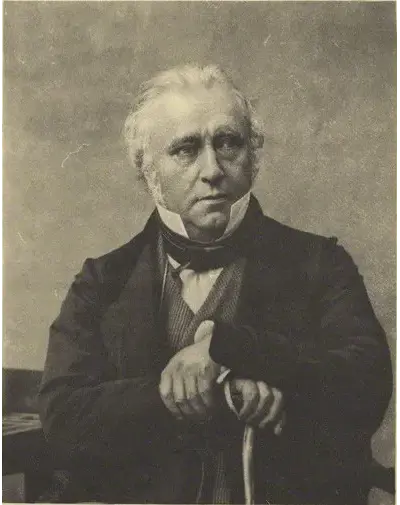
Thomas Babington Macaulay, 1st Baron Macaulay, FRS FRSE PC was a British historian and Whig politician. He wrote extensively as an essayist, on contemporary and historical sociopolitical subjects, and as a reviewer. His The History of England was a seminal and paradigmatic example of Whig historiography, and its literary style has remained an object of praise since its publication, including subsequent to the widespread condemnation of its historical contentions which became popular in the 20th century.
