William Petty Quotes
Among the general Causes is, First, the unwillingness of the people to pay them [taxes]; arising from an opinion, that by delay and reluctancy they may wholly avoid them, with a suspicion that what is imposed is too much, or that what is collected is embezzled or ill expended, or that it is unequally levied and assessed…. Moreover, the peoples believing that Forms of Government shall in a few years produce any considerable alteration as to the wealth of the Subject; that the Form which is most ancient and present is not the best for the place; that any established family or person is not better then any new pretender, or even then the best Election that can be made; that Sovereignty is invisible, and that it is not certainly annexed unto some certain person or persons …. Causes of Civil War are also, that the Wealth of the Nation is in too few mens’ hands … the allowing Luxury in some, whilst others starve.
William Petty, 1623-1687, English Economist & Demographer, Causes of Revolution and Rebellion, A Treatise of Taxes & Contributions, 1662
Sourced by: Eigen's Political and Historical Quotations


By producing growth and an increasing standard of living and universal education, capitalism’s citizens have the time, education, and resources to protest and produce social unrest. However, that assumes that there is also a democratic state. For Schumpeter and many others, capitalism and democracy go hand in hand, but many point to historical examples of one developing faster than the other.

The Tay Son Rebellion had overthrown the Nguyen Lords in the South by 1783 and then the Trinh Lords in the North in 1789. The revolutionary unification of Vietnam was short lived when Hue, the conqueror of the North, died in 1792. See {42229} for a reason for the very high taxes.


This quotation shows that the dissent leading to the American Revolution did not emerge suddenly in 1776 after the Battle of Bunker Hill. Dissent, sedition and even violence was documented here in 1774. Salem at the time was the second largest port in the colony and the customs tax collectors—Loyalist Americans—were run out of Salem.

This is another example where our intelligence analysis was totally wrong. It also shows that intelligence being influenced by ideology and politics has a long history in America as elsewhere.

See {34743} or {33971} for a more colorful and eloquent statement of the same notion.


In developed nations land tends to be fungible—there is a fair market value to land and there is little emotional attachment to a particular piece of land. However for aborigines and citizens of many lesser developed countries, land is not fungible. Ancestor burial, tradition, family identity, dignity requires a particular plot of land—not just acreage. So taking of land—even with monetary compensation—is often liable to induce violent protest.

This was one of the several early unofficial Emancipations that was issued in the Civil War.


Vladimir Lenin
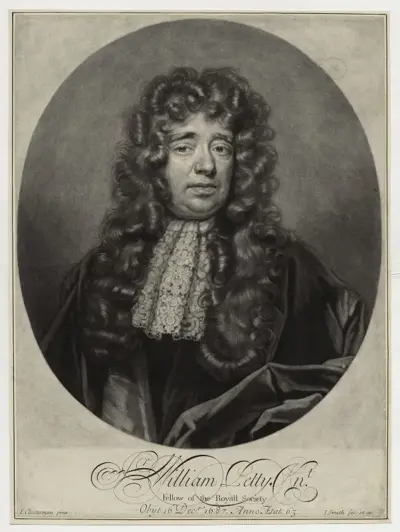
Sir William Petty FRS was an English economist, physician, scientist and philosopher. He first became prominent serving Oliver Cromwell and the Commonwealth in Ireland. He developed efficient methods to survey the land that was to be confiscated and given to Cromwell's soldiers. He also remained a significant figure under King Charles II and King James II, as did many others who had served Cromwell.
