Aubrey McClendon Quotes
American business would be run better today if there was more alignment between CEOs' interest and the company. For example, would the financial crisis of 2008 have occurred if the CEO of Lehman and Morgan Stanley and Goldman and Citibank had to take a very small percentage of every mortgage-backed security... or every loan they made?
Helman, Christopher. "Aubrey McClendon Speaks: The Unexpurgated Interview." Forbes, 30 Sept. 2011.


High level financial industry executives were earnings millions of dollars even if the company did poorly. In many cases annual bonuses were paid even after the firm lost money and in some cases after the firm had to be sold to stave off bankruptcy. The worst thing in 2009 and 2010 was when some of the banks paid million dollar and more bonuses while the company was getting bailout money from the taxpayers to prevent their bankruptcy.

This warning was a decade before the Meltdown of 2008, but was not heeded by any of the politicians. As a result a number of the companies that made all those risky decisions assumed that if something went terribly wrong the government would not let them fail. Unfortunately, they were right and the taxpayers spent billions to prevent companies from failing. After the meltdown all the politicians vowed to end the too big to fail concept, but while some improvements were made, the Congress could not come to agreement, and the markets and a number of companies think that they are still too big to fail. This is particularly true for Defense Contractors where the government has and probably will in the future, protect irresponsible companies from failure if they are the only company that makes needed weapons and other equipment.


While Stockman and some others believe that the Meltdown of 2008 would have “run its course” if the government didn’t bail out financial institutions, the very conservative Republican Secretary of the Treasure Paulson and the Chairman of the Federal Reserve told President Bush, Congress, and incoming President Obama that if there was not a quick bailout, the economy of the nation would crash with a depression resulting as bad if not worse of the Hoover Depression of 1929. Bush and Obama and the majority of Congress agreed and took action to avoid that. There is no way of knowing whether they were right or Stockman was. However, the people with the responsibility of governing and safeguarding the nation clearly did not want to take a chance that the advocates of no action might be wrong.

He was referring to Fannie Mae, the government-created. private mortage guarantee company. It was heavily regulated, and in general it met the regulatory requirements. However, the requirements were insufficient, and in the 2008 Meltdown and the Great Recession that followed, Fannie Mae itself was in such bad financial condition, that the Federal Government had bail them out or have the entire home mortgage industry fall apart.

Greenspan accepted this as many other economists and financial regulators did. What they did not take into account was the incredible greed of many of the financial executive who were betting with their customers money, If the bet was right they, the shareholders and the customers all made out very well as they were highly leveraged. If the bet was wrong, the shareholders and customers lost a lot, and the financial executives only made their multimillion dollar salaries and bonuses (Many were actually were guaranteed their bonuses even if they put the company into bankruptcy.) Worse, they earned their money when they made their sales or earnings targets, but when the securities they bought went sour, even if the company had no funds left, the. It was “heads we all win and tails only I win.” The vested interests between the financial company executives, the shareholders, and the clients were divergent, and the customer was at the bottom of the money pole.


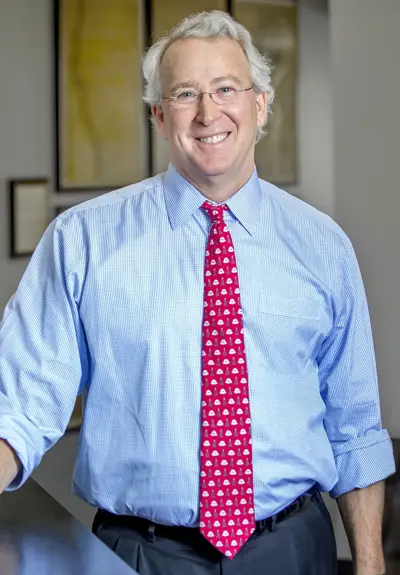
Aubrey Kerr McClendon was an American businessman and the founder and chief executive officer of American Energy Partners, LP. He also co-founded Chesapeake Energy, serving as its CEO and chairman. He was an outspoken advocate for natural gas as an alternative to oil and coal fuels, and a pioneer in employing fracking.
