Mustafa Kemal Ataturk Quotes
Although we are very strong, we are pursuing a very calculating and moderate policy. We prefer a political solution and are managing the situation accordingly.
Ataturk advocated a very strong military establishment that should rarely if ever be used—always preferring a diplomatic, political solution to foreign policy problems.
Kemal Ataturk, 1881-1938, 1st President and founder of the Turkish Republic, A cable to his ministers, September 22, 1922
Sourced by: Eigen's Political and Historical Quotations

Iraq’s program of mass destruction weapons development


This is an interesting historical quotation because it shows the role of the Queen in the English Government at the middle of the 19th century. What the quotation shows is that the drafts of significant foreign policies were sent to the young 29 year old Queen for approval. However, her review was not perfunctory, In {630732} it showed how she analyzed proposed policies and pointed out flaws and shortcomings. In this quotation she not only criticized a part of the draft policy but actually wrote her own copy to be included. War was then raging in Lombardy between the Austrians under Marshal Radetzky and the Piedmontese under the King of Sardinia and she believed the Palmerston draft did not do enough to make the Austrians see England as an objective party. And she wanted to be much more proactive and have the British Foreign Ministry mediate the conflict. This would be like a President of the United States taking a draft of a foreign policy from the State Department, instead of either approving or disapproving it, redrafts it to add some additional elements and make the language more comfortable for the parties. And she did this when by U. S. standards she was not old enough to even run for Congress. (And women in the United Kingdom could not even vote.) Note that the formality of the time required that the Queen refer to herself in the third person and not the first.


China had a similar policy with each side wanting to establish more of a precedent for its ownership of the islands. Military flyovers, landing parties raising national flags by both countries triggered counter measures and the likelihood of casualties and even death to some soldiers. Both sides seemed willing to risk the lives of their troops as long as the conflict could be contained thereafter. But sometimes it cannot be.


Turkey had just defeated a Greek invading army with bitter atrocities on both sides. The two countries were bitter enemies. His colleagues thought Ataturk had lost is sense of reality to even suggest such a thing. 50 years later Greece and Turkey were both in NATO.


This is one of the earliest instances in which formal American foreign policy called for aggressively preventing other nations from war. This speech was audio recorded -- quite unusual for the time -- and can be heard to this day.

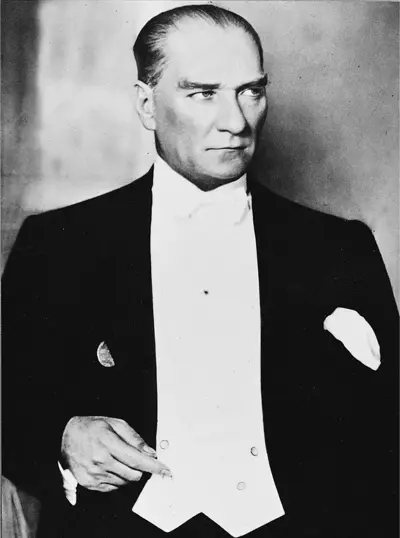
Kemal Atatürk was a Turkish field marshal, revolutionary statesman, author, and the founding father of the Republic of Turkey, serving as its first president from 1923 until his death in 1938. He undertook sweeping progressive reforms, which modernized Turkey into a secular, industrial nation. Ideologically a secularist and nationalist, his policies and theories became known as Kemalism. Due to his military and political accomplishments, Atatürk is regarded as one of the most important political leaders of the 20th century.
