Mustafa Kemal Ataturk Quotes
One day we might find ourselves making an alliance with the Greeks.
Turkey had just defeated a Greek invading army with bitter atrocities on both sides. The two countries were bitter enemies. His colleagues thought Ataturk had lost is sense of reality to even suggest such a thing. 50 years later Greece and Turkey were both in NATO.
Kemal Ataturk, 1881-1938, 1st President and founder of the Turkish Republic, A statement to colleagues, November 1922
Sourced by: Eigen's Political and Historical Quotations


For over 50 years both the United States and Cuba had carried grudges about the Bay of Pigs, the boycott on purcuase of life saving medicine and U. S. attempts to assassiate Fidel Castro on the Cuban site, and the expropriation of Americans' Coban Prepoert, the poor record on human rights, the Mariel Boat Lift, and the harboring of American criminals for the United States. The policy positions held by the two nations had not produced anything constructive so the parties agreed to try and build closer ties. In just two years of a limited reproachment some progress had been made and Prices point about getting beyond the past tried to get all focussed on the future.


The Conclusion of the Russo-Japanese War. The treaty was negotiated and signed in Portsmouth New Hampshire. President Theodore Roosevelt was awarded the Nobel Peace Prize for his mediating efforts. The language was typical of a peace treaty where just before its signature the two nations and their emperors were vilifying and dehumanizing the other.


Conservative hard liner hawks in both countries wanted a much more contentious and hostile relationship between the two nations. Reagan especially had to cope with a significant base of his Republican support. In any attempted peace or disarmament negotiations, there are people in both nations who profit economically, politically or ideologically from continued strife. This always makes the process difficult.


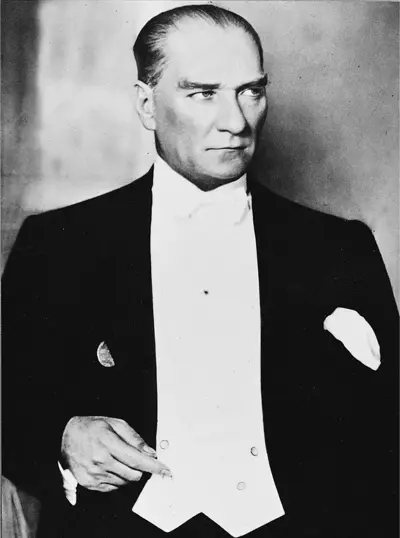
Kemal Atatürk was a Turkish field marshal, revolutionary statesman, author, and the founding father of the Republic of Turkey, serving as its first president from 1923 until his death in 1938. He undertook sweeping progressive reforms, which modernized Turkey into a secular, industrial nation. Ideologically a secularist and nationalist, his policies and theories became known as Kemalism. Due to his military and political accomplishments, Atatürk is regarded as one of the most important political leaders of the 20th century.
