Sir Horace Rumbold, 9th Baronet Quotes
Even if the Peace of Lausanne is not perfect peace...the great relief that peace affords is quite likely to give the mentality of the Turks a new turn.
Horace Rumbold, 1869-1941, British Diplomat, Statement, 1923, Quoted in Andrew Mango, Ataturk
Sourced by: Eigen's Political and Historical Quotations

In the complicated and arcane Middle East, substantial majorities of Israelis and Palestinians both favored a two state solution, thus creating a Palestinian State out of the West Bank and Gaza. However, the Hamas terrorist organization won the majority of seats in the Parliament and formed the “government” of the Palestinian Authority. Hamas opposed Israel’s right to exist at all, as that position as well as virulent Anti-Semitic threats to all Jews in the world. Many called for Hamas to change their charter and crease their opposition to the right of Israel to exist. The President of the Palestinian authority called for new elections but Hamas refused. Thus Blair and other diplomats the world over were in a very difficult situation.


The Palestinians were split between supporters of Hamas and Fatah. The former was a terrorist organization which refused to recognize the right of Israel to exist and whose charter called for the killing of all Jews. The latter, accepted the right of Israel to exist and was committed to peace and coexistence with the Jewish state. They had fought a civil war and Hamas controlled Gaza with well over 1 million people which they seized for force and killed of forced out Fatah Representatives. Fatah was the elected ruling party of the West Bank, the larger and more populous of the Palestinian territories. There was little chance of any peace given that split. However, Israel which had undergone over 7000 rockets fired upon them by Hamas, stated that they refused to negotiate with the Palestinians as long as the Hamas terrorists were a part of the control of the potential Palestinian state. They would only discuss a 2 state solution if Hamas agreed that they accepted the right of Israel to exist in their general territory as a Jewish State, Hamas would accept and follow previous agreements made with the Palestinians, and Hamas would give up terrorism and the objective of killing Jews. So either Hamas would have to change its policies or Israel would negotiate with an organization that claimed it would never accept the existence of that country as a Jewish state. Al-Masri thought that the agreement he had mediated, was a necessary first step and was constructive for all the parties.


Turkey with the decline of the Ottoman Empire, had little experience in modern international politics—and no modern leaders until Ataturk came and modernized the nation. The Turks had allied themselves with Germany in WWI and in the aftermath came out as badly in the peace as they had in the war.

Turkey had just defeated a Greek invading army with bitter atrocities on both sides. The two countries were bitter enemies. His colleagues thought Ataturk had lost is sense of reality to even suggest such a thing. 50 years later Greece and Turkey were both in NATO.

Ataturk advocated a very strong military establishment that should rarely if ever be used—always preferring a diplomatic, political solution to foreign policy problems.


The Russian motivation for going to the aid of Serbia when the Austro-Hungarian Empire attacked that country was religious affinity. Both were of the Orthodox Church and the Orthodox Slaves had historically been attacked by the Roman Catholic Teutons. Russia had exercised hegemony over regions outside of Russia where there were Christian Orthodox co-religiouists.

At the time, Palestine was technically Turkish territory. Turkey was one of the defeated axis powers in World War I. England, as part of the World War I peace treaties, had control over Palestine as well as most of the rest of the Middle East.

Shlomo ben Yitzchak


The quotation was made in the context of the Arab Israeli conflict, but the principle is general.


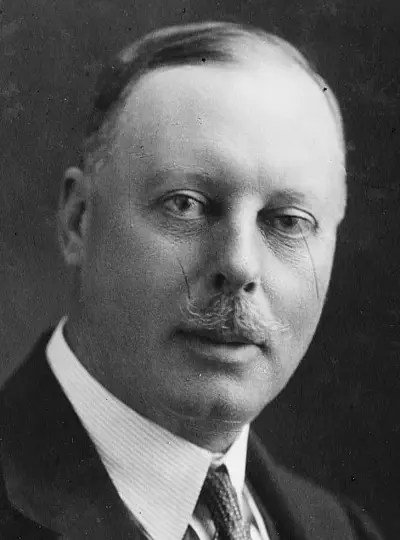
Sir Horace George Montagu Rumbold, 9th Baronet, GCB, GCMG, KCVO, PC was a British diplomat. A well-travelled diplomat who learned Arabic, Japanese and German, he is best remembered for his role as British Ambassador to Berlin from 1928 to 1933 in which he warned of the ambitions of Hitler and Nazi Germany.
