Richard Crossman Quotes
Already I realize the tremendous effort it requires not to be taken over by the Civil Service. My Minister’s room is like a padded cell, and in certain ways I am like a person who is suddenly certified a lunatic and put safely into this great vast room, cut off from real life ... Of course, they don’t behave quite like nurses because the Civil Service is profoundly deferential – “Yes, Minister! No, Minister! If you wish it, Minister! Yes minister.”
Richard Crossman, 1907-1974, British Member of Parliament (Labour), Minister of Housing, Editor, The Diaries of a Cabinet Minister, Vol. 1, 1975
Sourced by: Eigen's Political and Historical Quotations


The Russian autocrat found it hard to believe that peasants and merchants could have any rights at all as they did in England. He faulted the female ruler, the great Queen Elizabeth I. By modern standards Elizabeth had awesome power and the English People very little, but Elizabeth was relatively restrained in her use of power and paid attention to the effect of affairs of state had on the people." Ivan the Terrible


3rd Viscount Palmerston. Lajos Kossuth was the Hungarian leader of anti-monarchists who were agitating for a Parliament. While many English people sympathized with Kossuth, his government, which had good relations with England, did not want any of the other European Governments to officially meet with him. It was considered insulting to a government if a friendly government met officially with a politician who was not approved by his own government. Palmerston, as Temple was referred to, wanted to show English sympathy with the reforms advocated by Kossuth. He was then the Foreign Minister and wanted to invite Kossuth to the Foreign Ministry. However the Cabinet had a meeting and voted against the idea which would not only inflame the Hungarian government, but would outrage all the other countries in Europe for this diplomatic insult. Palmerston then decided that he would meet with Kossuth in his private residence. When the Prime Minister discovered this plan, he sent a note by messenger telling Palmerston that he was the Foreign Minister and inviting Kossuth to his home could not be seen as an official action. Palmerston has his own political base and had enough supporters in Parliament that if he would be fired, he could bring down the coalition government. So in effect he told his Prime Minister off and dared Russell to fire Palmerston. Then he went ahead with the meeting. The cabinet was upset, Queen Victoria was outraged (she never cared for Palmerson as a Foreign Minister), the Newspapers had a field day, and all the European counties complained vehemently to the Queen and the Prime Minister. But Russell didn’t dare fire Palmerston at that point. However, with Queen Victoria’s shrewd political maneuvering and Russell coalescing support, he was able to demote Palmerson to Home Secretary and assume the Foreign Ministry himself in 1952. However, Palmerston had the final winning hand, when 3 years later, he was elected Prime Minister and he and the Queen had to make a rapprochement.

3rd Earl Russell of Kingston


That is one view—the one tried the most frequently by Presidents who by their own estimates didn’t get a responsive civil service working to his priorities. Presidents like Teddy Roosevelt, Franklin Roosevelt, and Dwight Eisenhower and Lyndon Johnson had great cooperation from their civil servants; they instead appointed very competent people with strong senses of fairness and leading personnel. Ronald Regan tried both techniques. He used Wilson’s technique in his Education and Justice Department where there was slow-rolling and dissonance when his appointees tended to be ideologues with little or no outstanding professional competence in the fields they supervised. However, his military and State Department bureaucracies was very responsive to his appointees who were excellent leaders.


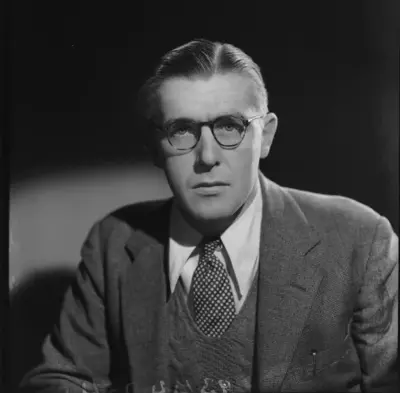
Richard Howard Stafford Crossman OBE, sometimes known as Dick Crossman, was a British Labour Party politician. A university classics lecturer by profession, he was elected a Member of Parliament in 1945 and became a significant figure among the party's advocates of Zionism. He was a Bevanite on the left of the party, and a long-serving member of Labour's National Executive Committee (NEC) from 1952.
