Thomas Wentworth Higginson Quotes
All... religions show the same disparity between belief and practice, and each is safe till it tries to exclude the rest.
Higginson, Thomas Wentworth. The Sympathy of Religions. Free Religious Association, 1871, p. 28.


Watchtower Bible and Tract Society of New York


This quotation illustrates that a narrow orthodox view of Islam is not the only one in Arab nations. Khaled is not an obscure cleric, but a popular television personality. While his views are considered heresy by many orthodox Muslims, the narrow view is by no means universal. Orthodox Islamists believe that God has commanded that all mankind be Muslims and the ones who are not are either ignorant so need to be “educated”, or evil and therefore should be killed. However, Muhammad ordained that an exception should be made for “Children of the Book”—Jews and Christians who revere the Old Testament. This was at a time when Christians would not allow any other form of worship but Christianity. Christianity, Judaism and most other religions have become tolerant of other religions and allow open alternative worship. Islam which early on led the way to tolerance, has in many countries gone back to the intolerance that existed amongst many Christians at the time of Muhammad.
His protest was focused on Middle East policies which he believed did not value the lives of Muslims as highly as Christians and Jews. The irony of this protest is that United States policy claims to value all life equally as do virtually all industrialized democracies. Omeish however is unusual among world Islamic leaders and politicians in that he values Christian and Jewish life as much as Muslim. Most, typically value Muslims almost exclusively and many advocate the killing of Christians and Jews.

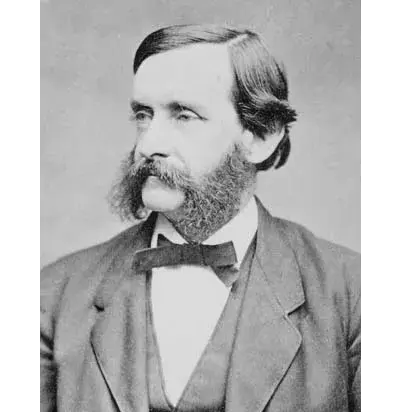
Thomas Wentworth Higginson was an American Unitarian minister, author, abolitionist, and soldier. He was active in the American Abolitionism movement during the 1840s and 1850s, identifying himself with disunion and militant abolitionism. He was a member of the Secret Six who supported John Brown. During the Civil War, he served as colonel of the 1st South Carolina Volunteers, the first federally authorized black regiment, from 1862–1864. Following the war, Higginson devoted much of the rest of his life to fighting for the rights of freed people, women and other disfranchised peoples.
