Vladimir Lenin Quotes
All official and liberal science defends wage-slavery, whereas Marxism has declared relentless war on that slavery.
Lenin, Vladimir I. "The Three Sources and Three Component Parts of Marxism." 1913. Lenin Collected Works, Vol. 19, Progress Publishers, 1963, p. 23.

Sinclair had written an expose of the meat packing industry – the Jungle – which used as its setting the Armour meat packing factory. It changed the way the public thought about the industry, the role of government and regulation. President Roosevelt took up the reform role, and got Congress to Regulate the quality and cleanliness of the meat packing industry. Sinclair, however not only wanted that reform, but also wanted the labor wages and conditions reformed. He referred to the Armour plant as the fortress.


At the time, it did seem impossible that labor and capital would ever have harmonious relations. But the notion that slavery would solve the problem is as preposterous as anything ever entered into the American political dialogue. But there were many in the South, and some in the North, who actually believed it. Even 150 years later, while labor and capital relations were much better than pre Civil War, they still could not be described as “harmonious” or “friendly”.


What the Supreme Leader did not understand was that the very books that he recommended to see the faults of America were the very instruments that influenced the American reformers to change and improve America. And the lesson he missed is that he would not allow authors to heavily criticize the current Iran and have a wide audience so that Iran could improve. His examples were very well chosen. The lesson is the wrong one however.

This fascinating quotation is very frequently quoted out of context. For example even in modern times some Southern slavery apologists quote this passage stating that Adams saw no moral difference between slavery and employment of the lower classes. And anti-capitalists have claimed that this was an attack on capitalism as no better than slavery for many workers. Neither is true. The debate was on the head taxes that states should pay to the central government. Southerners were claiming that they should not have to pay per person taxes on slaves. Adams position was that they should pay in that there is no practical difference in the work and working conditions very often. If slaves should be exempted from the head tax, so should the poor, lower class workers like the fisherman in New England. He always maintained at huge moral difference between a poor free worker and a slave even thought their working conditions might be similar.


The doctrine of the Southern Cotton industry before the Civil War was that Capital should not only use labor and control labor, but that in true capitalism, Capital should own labor—slavery. This Southern hostility towards labor rights and organized labor was derived from this extremist view of capitalism.

See {616053}. The strike was broken by jailing one of the main leaders.


Jefferson was one of the first political and economic thinkers to express concern over the “wage slave” concept of the industrial revolution. This was one of the major reasons that he was not in consonance with Alexander Hamilton in his economic vision for America. While we followed the Hamilton direction, there are still issues of maintaining freedom and independence for an employee in modern nations and economies.

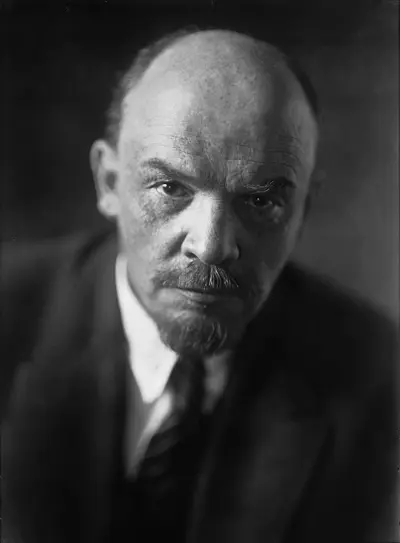
Vladimir Ilyich Ulyanov, better known by his alias Lenin, was a Russian revolutionary, politician, and political theorist. He served as the first and founding head of government of Soviet Russia from 1917 to 1924 and of the Soviet Union from 1922 to 1924. Under his administration, Russia, and later the Soviet Union, became a one-party socialist state governed by the Soviet Communist Party. A Marxist, he developed a variant of this communist ideology known as Leninism.
