Ed Asner Quotes
All capitalists should be like Warren Buffett, and he says he should be taxed more.
Asner, Ed. The Grouchy Historian: An Old-Time Lefty Defends Our Constitution Against Right-Wing Hypocrites and Nutjobs. Simon & Schuster, 2017.


An income tax had been instituted during the Civil War but had lapsed. Existing taxes were all excise or head taxes—very regressive. Later there was a political movement to bring back the income tax with the intention of taxing all income equally. There was a titanic struggle which culminated in a Constitutional Amendment allowing the income tax. None of the original politicians, for or against, the income tax could never imagine an income tax that would charge lower rates for investment income. That was the entire purpose of the income tax at the beginning—to tax investment (unearned) income. The “capital gains tax” was the creative way of the rich getting back some of what they thought the lost when the income tax was instituted.

There are some in America who believe that progressive taxation where the rich pay at a higher rate was an invention of the New Deal and FDR. As this quotation shows, it was a well understood and debated concept before there was a United States.


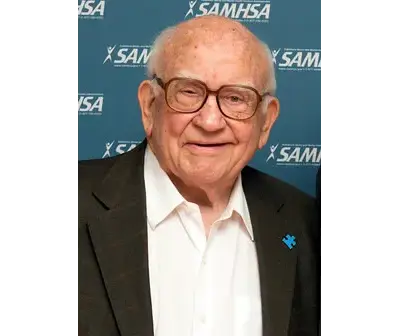
Eddie Asner, known generally as Ed Asner and sometimes Edward Asner, is an American actor, voice artist, and a former president of the Screen Actors Guild. He is perhaps best known for his role as Lou Grant during the 1970s and early 1980s, on both The Mary Tyler Moore Show and its spin-off series Lou Grant, making him one of the few television actors to portray the same character in both a comedy and a drama. He is the most honored male performer in the history of the Primetime Emmy Awards, having won seven – five for portraying Lou Grant (three as Supporting Actor in a Comedy Television Series and two as Lead Actor in a Dramatic Television Series). His other Emmys were for performances in two of the most significant mini-television series of the 1970s: Rich Man, Poor Man (1976), where he won for Outstanding Lead Actor for a Single Performance in a TV series, and Roots (1977), for which he won for Outstanding Single Performance by a Supporting Actor in a TV series.
