Robert M. La Follette Quotes
So long as there is an income to be found in the country so large that it yields to its possessor a surplus over and above what he needs for the comfort or even luxuries of life for himself and his family, I am in favor of taking such portion of the surplus income by taxation as the Government needs for war purposes, and if it needs it all I am in favor of taking it all before we take one penny from the slender income of a man who receives only enough to provide himself and family with the bare necessities of life.
Robert M. La Follette, 1855-1925, Governor of Wisconsin (Republican), U.S. Senator (Republican, WI), Presidential Candidate (Progressive), Senate speech, August 21, 1917
Sourced by: Eigen's Political and Historical Quotations


An income tax had been instituted during the Civil War but had lapsed. Existing taxes were all excise or head taxes—very regressive. Later there was a political movement to bring back the income tax with the intention of taxing all income equally. There was a titanic struggle which culminated in a Constitutional Amendment allowing the income tax. None of the original politicians, for or against, the income tax could never imagine an income tax that would charge lower rates for investment income. That was the entire purpose of the income tax at the beginning—to tax investment (unearned) income. The “capital gains tax” was the creative way of the rich getting back some of what they thought the lost when the income tax was instituted.

This became known as the Buffet Principle—that the very rich should not pay a lower tax rate than the workers who make far less money than they do. President Barack Obama used this principle by name in calling for the 2011 Jobs Act which would eliminate some of the loopholes and exemptions by which the rich could avoid some or much or their tax obligation.


This is a classic quotation of political techniques during the Red Scare of the 1950s and 60s and to a lesser extent continues today. Whatever a politician disapproves of is labeled as Communism or Socialism. If a major communist documents was in favor of the target of the politician, that is offered as ‘proof.’ At the time this statement was made, almost every single one of the democracies and dictatorship that were in the Anti-Communist block led by the U. S. had an income tax. There were a number of communist countries that did NOT have an income tax. Racial discrimination was prohibited in many Communist documents, so any one who urged an end to legal discrimination was accused by Southern segregationists of being communists and urging communism for America. See {619998} for the same technique used for the same opposition to the income tax almost a century earlier.

The debate over whether taxes that paid on stock market and other investment profits should be at the same rate as taxes paid on salaries or other earned income has been going on for many years. It usually plays out in an argument that capital gains taxes should be at a lower rate than regular income taxes. Policy on this issue has gone back and forth.


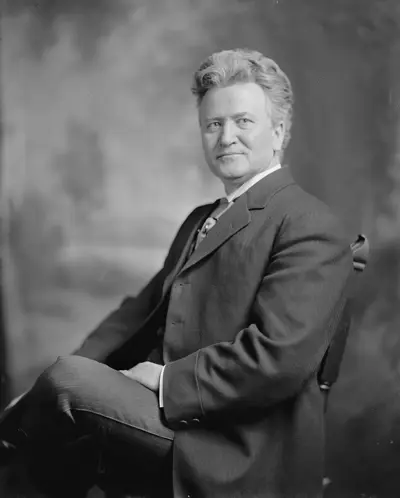
Robert Marion "Fighting Bob" La Follette Sr., was an American lawyer and politician. He represented Wisconsin in both chambers of Congress and served as the Governor of Wisconsin. A Republican for most of his career, he ran for President of the United States as the nominee of his own Progressive Party in the 1924 presidential election. Historian John D. Buenker describes La Follette as "the most celebrated figure in Wisconsin history."
