Joseph Rotblat Quotes
Alice Stewart [is] a much underestimated scientist who has been an indomitable challenger of the establishment and a thorn in the flesh of the nuclear industry.
Rotblat, Joseph. "Foreword." The Woman Who Knew Too Much: Alice Stewart and the Secrets of Radiation, by Gayle Greene, University of Michigan Press, 1999, p. vii.


During the meltdown of the Japanerse nuclear reactors at Fukashima, American sailors were deployed to provide critical assistance fram an American aircraft carrier in the area. They played a significant role in getting the reactors under control. Many of the Japanese at the emergency area had suffered serious illness from the radiation exposure abd a number died. The crew of the aircraft carrier had developed a highly unusual prevelance of serious illness assocated with radiation exposure. The U. S. Defense Department was "styding the matter" but had not decided that the unusual illness patern was related to their assignment assisting in th emergency. A number of the sailors had come to japan and asked for damages from the Raactor company which like most American Corporations would not do or say anything. The Japanese government also was silent on the issue when the sailors came to Japan, However, this former prime minister felt so strongly that he visited the Sailors and took up their cause in letting the Japanese public know what had happened and how the government and the electic company were acting. This was Koizumi's tearful response to the press covering the saolors and their request.

The rate and intensity of the anti-nuclear power movement in Japan had slowed somewhat from the peak after the meltdown and catatostrope of Fuklishima. Professor Nakano was asked if this meant the end of popular social action regarding nuclear popwer.
Corporations in the nuclear business argue that Nuclear power is less expensive than otehr forns of ower that are in common use. However, when a nation adds the huge cost of maintianing a scientific infrastructure to inspect and regulate the nuclear power plants, and the costof establishing the contingency capability of popularion evacuation and containment when there is a nuclear accident, and then the cost of safely stopring and containing the spent but deadly radioactive fuel, the incredibly high cost of insurance, then it is clear that nuclear power is the most expensive form of power. However, some countries do it better than others with France being the only country at the beginning of the 21st century that operated nuclear power safely and efficiently. The United States, Russia and Japan had huge costs


He was speaking from retirement. When he was Prime Minister--2001-2005, and active politically, he was in favor of nuclear power for Japan. But after the meltdown of the reactors at Fukishima, he saw happening exactly what the corporation executives running the nuclear power told him could never happen. He aslo supported the claims of American Sailor who had provided much help in the nuclear emergency that they were suffering from deseases brought on by teh excessibe radiation that they encountered.

This was a political use of sarcasm and irony. Oak Ridge was the site of the largest facility for producing fissionable material in the world as the result of the Manhattan Project. And yet the problem of what to do with the radioactive waste has never been resolved. So Oak Ridge was producing more and more radioactive uranium in the area without a resolution in sight. The “joke” was that the people in the area were immune, so production could continue without a solution to radioactive waste.
The Chernobyl accident killed many, polluted a huge section of Russia for years, and even spread radiation thorough out Europe and Scandinavia.


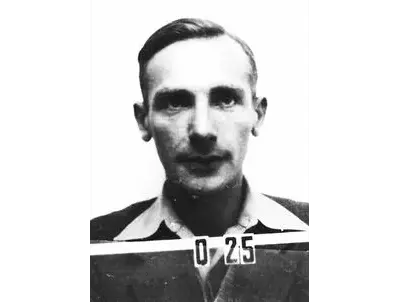
Sir Joseph Rotblat KCMG CBE FRS was a Polish physicist, a self-described "Pole with a British passport". Rotblat worked on Tube Alloys and the Manhattan Project during World War II, but left the Los Alamos Laboratory after the war with Germany ended. His work on nuclear fallout was a major contribution toward the ratification of the 1963 Partial Nuclear Test Ban Treaty. A signatory of the 1955 Russell–Einstein Manifesto, he was secretary-general of the Pugwash Conferences on Science and World Affairs from their founding until 1973 and shared, with the Pugwash Conferences, the 1995 Nobel Peace Prize "for efforts to diminish the part played by nuclear arms in international affairs and, in the longer run, to eliminate such arms."
