Benjamin N. Cardozo Quotes
Again and again, the altruist has arisen in politics, has bidden us share with others the product of our toil, and has proclaimed the communistic dogma as the panacea for our social ills. So today, amid the buried hopes and buried projects of the past, the doctrine of communism still lives in the minds of men. Under stress of misfortune, or in dread of tyranny, it is still preached in modern times as Plato preached it in the world of the Greeks. Yet it is indeed doubtful whether, in the history of mankind, a doctrine was ever taught more impracticable or more false to the principles it professes than this very doctrine of communism
Benjamin N. Cardozo, 1870-1938, Supreme Court Justice, Commencement Address, Columbia University, 1889
Sourced by: Eigen's Political and Historical Quotations

Socialism in its then pure form had the state owning and controlling all the major assets of the nation. In this sense it was contradictory to individual freedom and hence democracy. However, in the years after Tocqueville’s quotation and the industrial revolution, socialism has gradually moved away from state ownership and operations of all institutions and resources. Democracy has tended to adopt a more regulatory view to control the excesses of unbridled capitalism. The range of democratic nations by the 21st century encompassed differences but some were described as “social democracies” and had some state ownership but were basically capitalistic economies. Even the self-described Communist nations had become heavily capitalistic albeit with less political freedom. At the same time, even the United States—the epitome of 21st century capitalism, owned and controlled a few of the resources and means of production and tended to regulate the others—a substantial difference from the American democracy which Tocqueville studied.

3rd Earl Russell of Kingston. He favored and argued for a middle ground of a capitalistic socialism or a socialized capitalism, which is what most democracies became.


Even some of the Muslim countries of the OIC were embarrassed by the blatantly anti-Semitic speech of the host country prime minister. He parroted the discredited canard of the forged Protocols of the Elders of Zion.


The legislation to which he was referring was the Civil Rights Act of 1964 which had recently been enacted. This quotation illustrates how deep virulent racism was then embedded in American society—especially the South.

"Imperium" is a Latin word which, in a broad sense, translates roughly as 'power to command'. In ancient Rome, different kinds of power or authority were distinguished by different terms "Imperium" referred to the sovereignty of the state over the individual—Wikipedia. The Consul was a wonderful diplomat. He had no respect for the South not only because they were fighting to maintain slavery, but also he found most of their diplomats and officials very incompetent. He found it hard to participate in all the Confederate ceremonies as he was their exhibit number one that they had International Recognition and they "exhibited him frequently. Despite this he was charming and never argumentative about slavery or other political positions that he loathed. As a matter of fact, the Southern Diplomats regarded him as a man sympathetic to the South with an understanding of their point of view. As a result he gained a huge amount of intelligence which he regularly dispatched back to London. England was neutral {35520} in the Civil War, but England did not recognize the Confederacy as a nation, else they would have sent an ambassador. The Southern politicians worked hard to get him to carry their message that if they would be recognized, they would grant England many favorable trade advantages as the English textile industry really wanted Southern cotton. While apparently sympathetic to the Southern cause, his reports contained all the negative information about the South and counseled against recognition just as the English Ambassador in Washington did—see {583131}.

Hoover, a brilliant administrator before his presidency, was so ideological about the role of government that when the Great Depression came, he was unwilling to use government directly to cope with the new problems. He was turned out of office in favor of FDR and the New Deal which the voters ratified 4 times. Hoover was embarrassed by the New Deal successes and lashed out with many insults. In this case, he called the New Deal “fascist”. See {589568} for another quote where he labels the New Deal communistic. Ironically, Hoover is rated by most historians as one of the least effective Presidents in American history while Roosevelt is always rated among the top 3 presidents.

The Bank of the Untied States was not a government entity. It was a privately owned. Jackson arranged its demise. See {630653}


Since the end of WWII till the breakup of the Soviet Union, the Bulgarians were part of the Soviet Bloc and operated under communism that was supposedly based on Marxism. However it was not in many critical respects. But few modern Russian style Communists are familiar with or understand Marxism.

This was a very important quotation in that Sartre was a very influential liberal philosopher and when he condemned Russian communism, many other liberals opposed communism, and those who had already felt vindicated in their decision.


Metternich, the Chancellor of Austria under the Emperor was a very gifted and imposing diplomat. However he had little vision of the inevitable progress towards democracy and the liberalization of and limitation of the power of monarchs. His advice was on how to be better autocratic monarchs, not on how to reform and he saw no need for absolute monarchy to reform. He advocated press censorship and saw the press as a major enemy. See {630724}. The result was most of the monarchs who took his advice ended up being forced from power or required to cede much of their powers and “rights”. The English monarchs, after their disastrous civil war and its aftermath, in contrast, often led the reform to a constitutional monarchy where the powers and rights of the monarch was defined and limited by a Constitution. Victoria was one of the greatest of the English reforming monarchs, and saw Metternich’s conservatism as responsible for most of the disasters that befell the crowned heads of Europe while she had no such problems. See {607340} for Metternich’s negative view of Constitution.


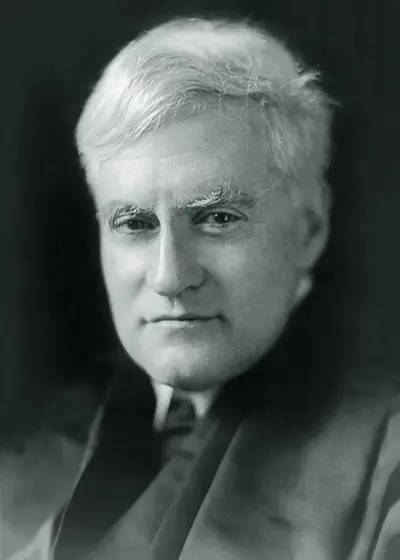
Benjamin Nathan Cardozo was an American jurist who served on the New York Court of Appeals and later as an Associate Justice of the Supreme Court. Cardozo is remembered for his significant influence on the development of American common law in the 20th century, in addition to his philosophy and vivid prose style. Cardozo served on the Supreme Court six years, from 1932 until his death in 1938. Many of his landmark decisions were delivered during his eighteen-year tenure on the New York Court of Appeals, the highest court of that state.
