Rose Schneiderman Quotes
After I had been working as a cap maker for three years it began to dawn on me that we girls needed an organization. The men had organized already, and had gained some advantages, but the bosses had lost nothing, as they took it out on us.
Schneiderman, Rose. "A Cap Maker's Story." The Independent, vol. 58, 27 Apr. 1905, pp. 935-938.


At the time, the NYC subway was operated by a private companies. Quill worked for the largest, the Interboro Rapid Transit Company. Quill organized the workers and forced major changes in the system.


Vladimir Lenin


At the time, it did seem impossible that labor and capital would ever have harmonious relations. But the notion that slavery would solve the problem is as preposterous as anything ever entered into the American political dialogue. But there were many in the South, and some in the North, who actually believed it. Even 150 years later, while labor and capital relations were much better than pre Civil War, they still could not be described as “harmonious” or “friendly”.


Darrow defended many labor leaders and organizers who had been accused of various wrongdoings—sometimes fairly and often on trumped up charges:. In a 1930 letter to Mark Sullivan he further explained:

Ironically, this view was also held by many of the capitalist “Captains of American Industry” who believed that all unions were revolutionist regardless of the views of the union’s membership or leadership. Even today, there are some who still equate trade unionism with communism and revolution. The majority of the unions and the left never believed that, but the extreme communists and extreme capitalists did than and some do today.

The then Vice President was accosted on the train by southerners who believed that he was on his way to his home state of Tennessee to persuade the legislature not to secede from the union. Amid cries to hang him and after he was punched by one of the mob, ex-Senator Wigfall—the man who had received the surrender sword at Sumter, who was also on the train, persuaded the crowd to hear Johnson out. Johnson thus began his speech which was potentially for his life, but never wavered from his view that secession was a mistake. Most of the crowd calmed down and as the train pulled out, they let him go though there were still a few shouts for “hanging.” There was no secret service protection for the President or vice President at the outbreak of the Civil War. Pinkerton had organized some informal protection for the President and thwarted some plots, but it was the Vice President who was attacked first. And there was not sufficient protection to prevent Lincoln’s assassination.


Ford was then 74 years old and had become a very different man than in his youth when he was the hero of labor. He was very paranoid at this time. He even thought that financiers were actually backing the labor unions because their purpose was to go to war against Hitler who Ford greatly admired and supported. See {642379}. He claimed that the way they would do it is to fund the labor unions so most workers would join unions. This he thought would eliminate competition and lower workers’ wages. When workers’ wages were pushed low enough, the workers would demand American entry into the war to create government spending on armaments and a labor shortage to drive wages up again. There was not a single financier who was actually paying or lending any money to labor unions, and most industrialists other than Ford complained that labor unions would always demand higher wages. Ford’s son Edsel was the chief operating officer of Ford Motor Company, and did his best to work around his father to keep the company healthy and deal with a terrible labor relations problem his father caused.
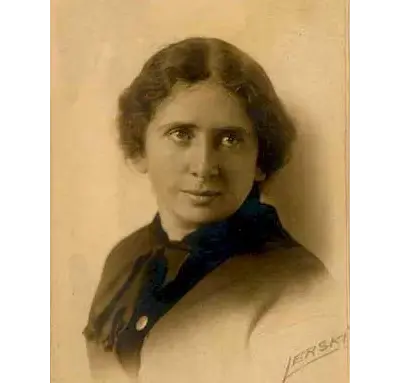
Rose Schneiderman was a Polish-born American socialist and feminist, and one of the most prominent female labor union leaders. As a member of the New York Women's Trade Union League, she drew attention to unsafe workplace conditions, following the Triangle Shirtwaist Factory fire of 1911, and as a suffragist she helped to pass the New York state referendum of 1917 that gave women the right to vote. Schneiderman was also a founding member of the American Civil Liberties Union and served on the National Recovery Administration's Labor Advisory Board under President Franklin D. Roosevelt. She is credited with coining the phrase "Bread and Roses," to indicate a worker's right to something higher than subsistence living.
