Emma Goldman Quotes
After all, that is what laws are for, to be made and unmade.
Goldman, Emma. Living My Life. Alfred A. Knopf, 1931, p. 826.


He had visited the House of Commons. The “problems” resulted from the fact that the English had to make their own laws rather than have them provided by God as in Islamic legal systems—Sharia.


Generally we make laws to try and stop bad actions. Without the bad actions, there would generally be no laws.
Many new laws have unintended consequences. In many cases the laws are not sufficiently effective to solve the problems for which they were passed. In other cases, the laws are too draconian and the public and the legislators have second thoughts. Almost all laws of significance require amendments and adjustments over the years.


This is a very important historical and political quotation. The first clause shows us that earmarks and private bills for the benefit of individuals and their commercial enterprises are not a new form of corruption; they have existed ever since there have been legislatures.
The most important aspect of this quotation is the SECOND clause. Very frequently, this is quoted alone without the context of the first clause. Taken alone, the meaning seems to be that the more corrupt governments pass the most laws, and there is an implication that fewer laws mean less corruption. This interpretation fits perfectly with the conservative ideology of the late 20th and early 21st centuries that believed that the smaller the government, the better; the fewer the laws passed, the better. However with the context of the first clause, we see that what Tacitus was criticizing the legislature that passed many earmarks and bills benefitting special interests. The more of these that were passed, the more corruption he argued. So he did not object to laws per se. He was not opining on the relationship between the number of laws and a corrupt government if the laws are for general benefit and not for special interests. Out of context, it might appear that Tacitus was supporting the small government, conservative philosophy. In context, he is arguing against earmarks and special interest legislation and supports what we call “good government” which has been bipartisan in America with parts of each party agreeing with Tacitus and other parts of each party trying to pass earmarks and special interest legislation.


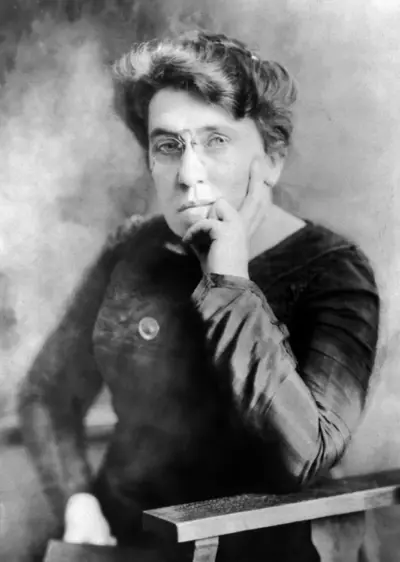
Emma Goldman was an anarchist known for her political activism, writing, and speeches. She played a pivotal role in the development of anarchist political philosophy in North America and Europe in the first half of the 20th century.
