Mark Twain Quotes
More than two hundred death penalties are gone from the law books, but the texts that authorized them remain.
Twain was referring to the Bible.
Mark Twain, Writer, Founder, Anti-Imperialist League, "Bible Teaching and Religious Practice," Europe and Elsewhere
Sourced by: Eigen's Political and Historical Quotations

For many extremists Muslims, this sura calls for the torture or killing of the enemies of Islam. For the more moderate Muslims, the penalty of opposing Islam should be expulsion or banishment. The further modern complication of this sura is the definition of “making war with Allah.” To some extremists, it is writing or publishing anything contrary to their view of Islam; it is occupying any Islamic nation or warring with that nation even though the basis of the war might have nothing to do with religion; it is bringing a Bible into an Islamic nations; it is allowing alcohol to be sold and served; it is opposing their discriminatory customs and laws; it is pressuring them not to stone adulteresses.

Trosch a radical right winger argued that Pope Paul should be removed from office for opposing capital punishment and a number of other “offenses.”


One of the first actions after the revolution was to abolish the capital punishment used so arbitrarily by the Czars. It was even abolished for the army. Later, when more control over the population was needed, it was reinstated.


This is the basis for the practice of Saudi Arabia and a few other nations which are so decried by most nations and religions or the world. Modern Muslims and Muslim nations do not follow this Koranic prescription any more than Christians and Jews follow the Mosaic Law of the Bible regarding punishment that we would today regard as cruel and which has become very unusual.

This Old Testament harsh penalty is one that Jesus later endorsed. See {588107}.
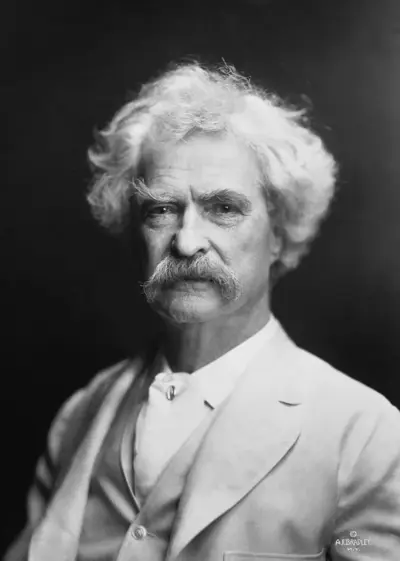
Samuel Langhorne Clemens, known by his pen name Mark Twain, was an American writer, humorist, entrepreneur, publisher, and lecturer. He was lauded as the "greatest humorist the United States has produced," and William Faulkner called him "the father of American literature". His novels include The Adventures of Tom Sawyer (1876) and its sequel, the Adventures of Huckleberry Finn (1884), the latter often called "The Great American Novel".
