Allen Drury Quotes
Advise and Consent
The title is borrowed from Senate Rule 38, which asks whether the Senate will advise and consent the given nomination.
Allen Drury, Novelist, Title of novel, 1959
Sourced by: Eigen's Political and Historical Quotations

In 2007 the Republicans, who were in the minority, began to use the filibuster to a degree that it had never been used. Within the single year of 2007 Republican’s filibustered 62 times, doubling the highest rate that had occurred before. A small minority of senators were able to block legislation that easily passed the House and was supported by the majority of senators and in some cases supported by the overwhelming majority of the American Public.


Lott and other Republicans who objected to Democratic Filibusters of a few judges. Later in the Obama administration he and Republicans had no problem when the Republican Senate minority filibustered just about everything—nominations, laws, budgets, treaties. They had more filibusters in that Congress than there had been in all of Senate history. It is always an issue of whose ox is gored with rampant hypocrisy on both sides in dealing with the filibuster concept. However, no majority in recent years has tried to change the filibuster, though the majority always complains about it.

Senator Conkling was the Republican Leader of the Republican Party and a party boss of the old school. Hays was a reformer, especially about appointments where he generally tried to pick the most meritorious candidate instead of the party loyalists desired by Conkling. There was (and still is) a tradition in the Senate that the Senators from the state of residence of any Presidential appointment had a veto of any Federal appointments in the state. Conkling, in addition to being the party leader, was the senior senator from New York and wanted two party loyalists for the jobs. Hayes appointed the better qualified men and decided to fight for the nomination of his candidates, but expected tha Conkling was strong enough to assure that the Senate would not confirm Hayes’ New York appointments. See {622341} for the outcome.
Senator Roscoe Conkling was the Republican Leader of the Republican Party and a party boss of the old school. Hays was a reformer, especially about appointments where he generally tried to pick the most meritorious candidate instead of the party loyalists desired by Conkling. There was (and still is) a tradition in the Senate that the Senators from the state of residence of any Presidential appointment had a veto of any Federal appointments in the state. Conkling, in addition to being the party leader, was the senior senator from New York and wanted two party loyalists for the jobs. Hayes appointed the better qualified men and decided to fight for the nomination of his candidates, but expected tha Conkling was strong enough to assure that the Senate would not confirm Hayes’ New York appointments. See {622340}. However, Hayes won.


At the beginning of the Trump presidency, he had a very diffferent idea of the role of the Senators in the Appontment of the Cabinet then other Presidents have had and certainly that most senators had. However, the Republicans held the majority and most were cowed by the threat of Trump encouraging the nativists and the Tea Party to run against them from the right in the next primary.


President George W. Bush had ordered NSA agents to bug the phones and email of American citizens who might have been talking with an overseas party or e-mailing them out of the country. The administration thought that American citizens might be part of terrorist sleeper cells or unwittingly were aiding terrorists. The law prohibited such activity—where American citizens were involved—without getting a court order. However, the President claimed that he had the inherent power as commander in chief of exempting the court requirement. Others maintained that even the President is not above the law. What was the big puzzle was that there was a secret court Congress had established just for such cases, but the administration instead decided to bypass the court.


In the summer of 1989 the House was anxious to adjourn for the summer recess but the savings and loan bailout legislation was stalled. The leaders of both parties forged a compromise which was not enthusiastically received by their members. A Democratic leader advised:

President George Washington dispatched David Humphreys on a secret mission to establish a diplomatic mission in Lisbon. To maintain the secrecy, he did not ask the Senate to confirm the appointment in advance.


Sometimes the costs of the bribes was too great an investment for the likely year. Bribery decisions were made with the same sort of analysis as buying land or a piece of capital machinery. Just business.
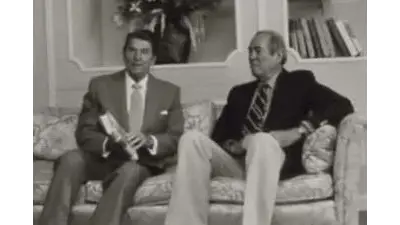
Allen Stuart Drury was an American novelist. During World War II, he was a reporter in the Senate, closely observing Presidents Franklin D. Roosevelt and Harry S. Truman, among others. He would convert these experiences into his first novel Advise and Consent, for which he won the Pulitzer Prize for Fiction in 1960. Long afterwards, it was still being praised as ‘the definitive Washington tale’. His diaries from this period were published as A Senate Journal 1943-45.
