Ambrose Bierce Quotes
Admiral. That part of a warship which does the talking while the figurehead does the thinking.
Bierce, Ambrose. The Devil's Dictionary. Neale Publishing Company, 1911.

The sloop Margaretta was escorting 2 small merchant vessels came into the port of Machias, Massachusetts to purchase some lumber and firewood. However the commanding officer of Margaretta did not like the terms of the negotiations and threatened the town. An aroused and angry group of patriots then boarded and attacked the two merchant ships. The commander of Margaretta then maneuvered out of the port having lost the two small ships. But the Patriots were angry with the commander of the sloop and being excellent seamen who knew the local waters, used one of the merchant ships and a small local vessel to chase down the Naval sloop. They then boarded and captured Margaretta and fatally wounded the commander, James Moore. While Lexington was the first land victory for the patriots, this was the first sea victory and the Margaretta was the first British warship that was captured by the Patriots.


China had then a very weak government. Ching Yih was the leader of a flotilla of over 1000 ships with entire crews and families numbering a force of over 70,000 people. They raided ships and towns on the coasts. Instead of single pirate ships, they would attack, even large, well armed, ships with a fleet. Some called them pirates; some thought of them as a floating nation. In 1807 the captains of all the ships met to select a new leader. One of the captains was the widow of Ching Yih, an admiral in her own right. The flotilla under Chin Yih had been divided into 4 fleets named for colors. The White fleet had been commanded by His Kai Ching—the only female captain. However, the White Fleet had been the most powerful and successful of the four. Ching surprised the men, who had expected to elect one of the 3 male admirals as the leader of the flotilla. After, her statement, they elected her. Of the females who have ever lead at sea, she commanded the largest armada and was the leader of a floating nation and an elected leader at that.

The Persians arrived at an abandoned city and burned some of the major buildings. All the Athenian men went to the island of Salamis where he gathered Greeks from the other city states. They boarded ships and tricked the march larger Persian fleet into coming into the narrow part of the straits where it could not maneuver. The Greeks destroyed the Persian fleet with relatively few losses and with it went Xerxes dreams of conquest of the Greeks. The Persian navy could not feed their army and the Persians, the greatest empire of the day, retuned to Persia in defeat.


Gingrich, who avoided serving in the military throughout his life, was frequently opining on military matters, tactics and strategy in his speeches, media appearances and many writings. Generally, he was a Chicken Hawk {625110} urging military action and war although he had personally never experienced it. He spent much time in military meetings and conferences, and thought that he had developed some expertise from this and his extensive reading.

Xerxes ignored her advice and attacked the Greek fleet at the Battle of Salamis. As Artemisia had predicted, the outnumbered Greeks routed the forces of Xerxes’ coalition preserving “The West” from dominance by “The East.” Artemisia’s fleet was the only one in the coalition to enjoy military success in the battle. See Xerxes {45633}. Artemisia is one of the first female military leaders and the only female naval commander until the end of the 20th century. She was 2500 years before her time.


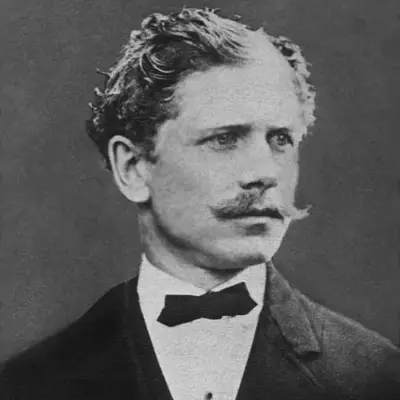
Ambrose Gwinnett Bierce was an American short story writer, journalist, poet, and Civil War veteran. His book The Devil's Dictionary was named as one of "The 100 Greatest Masterpieces of American Literature" by the American Revolution Bicentennial Administration. His story "An Occurrence at Owl Creek Bridge" has been described as "one of the most famous and frequently anthologized stories in American literature"; and his book Tales of Soldiers and Civilians (also published as In the Midst of Life) was named by the Grolier Club as one of the 100 most influential American books printed before 1900.
