Dean Acheson Quotes
About other Democratic candidates: Never say that any of them is not qualified to be President. Never say any of them can't win. Never suggest that any of them is the tool of an group or interest ...
Dean Acheson, 1893-1971, U.S. Secretary of State (Democrat), June 27, 1960
Sourced by: Eigen's Political and Historical Quotations


Republican Party primary elections had become very contentious. The radical right and the Tea Party, though a minority of the party, had the power to destroy almost any Republican candidate’s chances. So those Republican political candidates were forced to pander to the extreme right and then try and backtrack to the center for the general election. As a result, few people believed the statements of Republican office seekers as no one knew what they really believed including members of their own party, Bush, no longer running for any political position, found himself with much more credibility and influence in the party than those who were running for office. The problem of appealing to party extremes was not unique to the Republicans at that time, but the degree and extent was unprecedented accounting for the distrust.


Stimson had been a key member of the Theodore Roosevelt national administration, and Roosevelt, before he became Vice President and then President had been a very popular governor of NY. Stimson, although a brilliant administrator, and statesman was a bit stuffy and aloof and was a terrible campaigner. He thought it immodest to refer to himself in public or to talk about his record. See {589269}. So the Republicans tried to tie him to Roosevelt who was still very popular. See {589268}. It was not enough. Stimson lost.

Reacting to Steve Bannon call for replacing the existing Republican Senators with new candidates who will vote the party line with President Trump and be more radical. In a previous election the Tea Party had gotten nominated a few such ideologically right wing Republicans and they all lost badly.

Often a candidate will win even though there is a prevailing view that he/she is not well qualified and not worthy of the job. However he/she is not as bad as the other candidate. To win, all a candidate needs is to not be perceived as badly as his/her competitor.

In 2011 and 2012, there were several candidates vying for the Republican Nomination for the Presidency. The contest was close, and the candidates unleashed on each other the negative advertising and outrageously false accusations which they had previously only reserved to attack Democrats. They were so good at it, that they all drove up each others’ negatives—so much so that the potential Republican Candidate would be permanently scarred in the minds of the public. More mature and senior Republicans like McCain urged an end to the face to face confrontations of debates.

Most candidates who drop out of primary elections run out of money. If a candidate ever admits that he might quit, no one would give him any money and he would be forced to quit. Therefore almost all candidates lie about this in primary elections. Candidates like Ron Paul are an exception as they do not need much money to campaign, but those are few.


Garner was asked if Franklin Delano Roosevelt's paralysis would preclude his presidential candidacy:


Later, Eisenhower changed his mind and ran for the Republican Presidential Nomination. Truman, who had always been a strong Eisenhower enthusiast, felt that Eisenhower had lied to him and was distrustful of the General ever after.


In Iowa they have a caucus primary system, which is very foreign to most politicians.


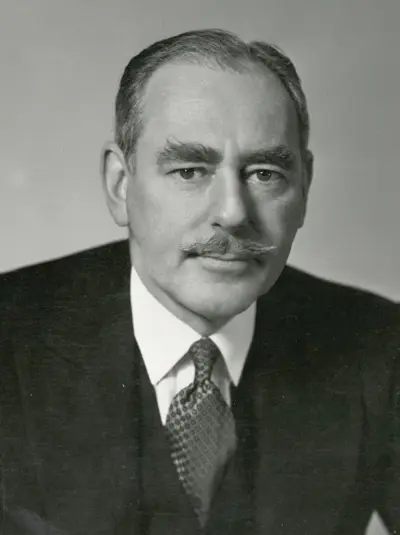
Dean Gooderham Acheson was an American statesman and lawyer. As United States Secretary of State in the administration of President Harry S. Truman from 1949 to 1953, he played a central role in defining American foreign policy during the Cold War. Acheson helped design the Marshall Plan and was a key player in the development of the Truman Doctrine and creation of the North Atlantic Treaty Organization.
