Theodore G. Bilbo Quotes
A. Philip Randolph is the type who believes in force and who has bragged about the technique of force which he used in the threatened march on Washington in 1941. This was the time when he intimidated the President of the United States with the threat of riotous conditions in the Nation's Capital at a moment when the whole Nation was preparing for World War II. Using this method, he and his collaborators secured the President's signature to the famous Executive Order No. 8802, which was the birth of the un-American bastard known as the Fair Employment Practice Committee. The word "reason" is not in his vocabulary. He does not know how to plead or ask for anything that he wants for the Negro people. Using the communistic pattern, he vociferously and obstreperously DEMANDS.
Note the technique of labeling any attempt to obtain equal rights for Blacks communistic. The communists were exploiting the racism and hypocrisy of American race relations and supported most civil rights efforts. However Randolph and most other Black Civil Rights Leaders were not communists although some were.
Theodore G. Bilbo, 1877-1947, Mississippi Governor (Democrat), U. S. Senator (Democrat, MS), Take Your Choice: Separation or Mongrelization
Sourced by: Eigen's Political and Historical Quotations

Most people associate the phrase with the 1963 march in which Randolph was one of the organizers and leaders. However, he first used the term in 1941 threatening President Roosevelt with a protest march in the middle of WWII unless Roosevelt ordered the discrimination in defense industries and the military to cease. FDR and his administration did much to improve the situation but came far short of equality. Randolph organized the March on Washington Movement in 1941 and in negotiations throughout the war, this was his trump card. Progress was made but slowly. Randolph maneuvered a fine line as he wanted to do nothing to hurt the war effort. Some severely criticized Randolph’s tactics which were quite effective. Finally in 1963, 22 years after Randolph had first threatened such a march, it finally took place, leading to the Civil Rights Act of the following year. See {625657} for a Southern racist description of Ranolph’s techniques and his victories.


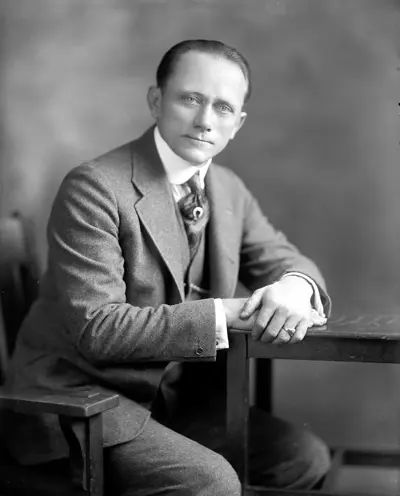
Theodore Gilmore Bilbo was an American politician who twice served as governor of Mississippi (1916–20, 1928–32) and later was elected a U.S. Senator (1935–47). A lifelong Democrat, he was a filibusterer whose name was synonymous with white supremacy—like many Southern Democrats of his era, Bilbo believed that black people were inferior; he defended segregation, and was a member of the Ku Klux Klan.
