Charles Sanders Peirce Quotes
A hypothesis is something which looks as if it might be true and were true, and which is capable of verification or refutation by comparison with facts.
Peirce, Charles Sanders. Collected Papers of Charles Sanders Peirce. Edited by Charles Hartshorne and Paul Weiss, Harvard University Press, 1931-1935.


This is a very important quotation because it illustrates a large difference between ideological politics and science and scientific thinking. As an example, one of the must fundamental rules of conservative Republicans at the beginning of the 21st century was that “If taxes are raised, the economic consequences will be that growth and development of jobs will slow. In the last 6 years of Ronald Reagan’s administration, he raised taxes. Yet the economy grew. In the early years of the Clinton administration income tax rates were increased, and America had the greatest growth rate in modern times as well as a balanced budget with a surplus. There have been a few other examples of “exceptions” to this “rule.” There were also many examples where the rule held. However, from a scientific point of view, with the FIRST exception the rule (principle) was invalidated. Yet Republicans continue to use and quote the rule which is clearly untrue. The scientist would likely have amended the rule to reflect reality: “In many cases, raising income tax rates will often slow economic growth.” However, politicians commonly state principles and rules despite the fact that there are exceptions. As for the statement “the exception proves the rule” there are few as absurd. One exception means no valid rule.


A null hypothesis is a statistical scientific term that a researcher assumes and uses to compare other things to. If there are no significant, found differences, the null hypothesis is not rejected. If significant differences are found, then the null hypothesis (yesterday's truth) is then rejected. In science, no one has been right for 400 years since Aristotle. Truth is never eternal. It is continuously subjected to testing and conformation and history has shown that with new instruments, new techniques and new other findings to work from, sooner or later what we think is true today turns out to not quite be so. Often it is not completely wrong, but the old "truth" turns out to be not so in all cases or situations. For example, the mechanics of Isaac Newton was assumed for a few centuries to be true. Then along came Albert Einstein and he showed that Newton was right except when objects were traveling at very high speeds when Relativity explained them. And in less than one century, we realized that Einstein's Relativity explained everything except very small particles which are better explained by Quantum Mechanics. This process of will almost certainly continue.

This quotation illustrates and important aspect of science. Specifically, that theory, something ephemeral and impractical to the layman, has immense practical power in developing great scientific and technological breakthroughs. The result of this breakthrough was large lenses that could make lights more powerful and make lighthouses much more safe. Even the atomic bomb was really developed from theory and then engineered for practical use.

This quotation from 1888 is apropos many of the major scientific advances which are counter-intuitive. Relativity was one; another was Quantum Mechanics where we have to learn to accept the fact that something can be in two (or more) places at once or that the exact same forces acting on an object can produce more than one result. Most non-scientists would see these as absurd, but they are basic characteristics of modern physics.
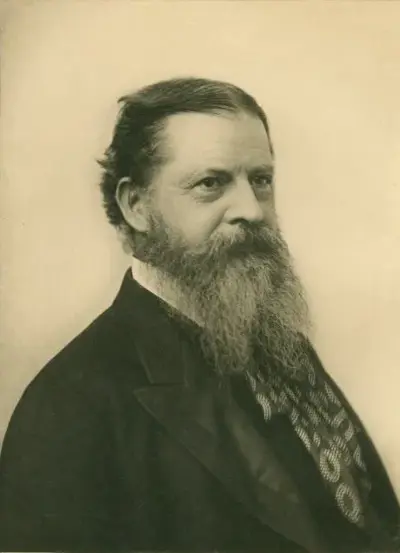
Charles Sanders Peirce was an American philosopher, logician, mathematician and scientist who is sometimes known as "the father of pragmatism".
