James Anthony Froude Quotes
Happily I had very early learned the fallacy of building much on logic and verbal argument. Single sets of truths I knew to be as little conclusive in theology as in physics; and, in one as in the other, no theory to be worth anything, however plausibly backed up with Scripture texts or facts, which was not gathered bona fide from the analysis of all the attainable phenomena, and verified wherever possible by experiment.
James Anthony Froude, 1818–1894, English historian, novelist, philosopher biographer, and editor of Fraser's Magazine, “Confessions Of A Sceptic”, 1849
Sourced by: Eigen's Political and Historical Quotations


This quotation from 1888 is apropos many of the major scientific advances which are counter-intuitive. Relativity was one; another was Quantum Mechanics where we have to learn to accept the fact that something can be in two (or more) places at once or that the exact same forces acting on an object can produce more than one result. Most non-scientists would see these as absurd, but they are basic characteristics of modern physics.


First Astronomy, then Geology, proved that the Creation that was described in the Bible was not literally correct. To religious fundamentalists who believe that every word of the Bible is the word of God or the word of those inspired by God, the only possibility of conclusion is that the science is wrong. To the extent that undermining the word of God is not acceptable to the fundamentalists, they have used every power—including the criminal law power of the state to stop the blasphemy and discredit the scientist. In 1856, there was a much larger proportion of fundamentalists in the Western World than there is today. By 2012, the vast majority of these same populations have rejected Christian Biblical Fundamentalism, and no longer attack science for its affect on religion. The minority of fundamentalists, however, are vehement in their opposition to science.

Spinoza’s ideas were considered so radical and dangerous that he was the only man in history who was excommunicated by the Catholics, the Jews and the Muslims.

Belief and/or ideology of even teh vast majority or the world has no influence on the vaidity and truth of science. A particualr scientific statement is true or not based an many factors, none of which have anything to do with beliefs, world views, custims, cultures, or religious doctrine.


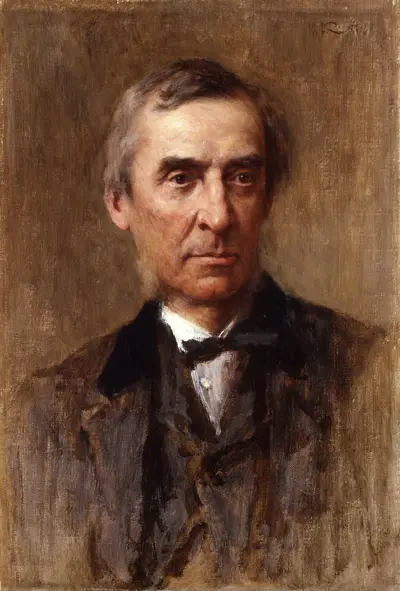
James Anthony Froude FRSE was an English historian, novelist, biographer, and editor of Fraser's Magazine. From his upbringing amidst the Anglo-Catholic Oxford Movement, Froude intended to become a clergyman, but doubts about the doctrines of the Anglican church, published in his scandalous 1849 novel The Nemesis of Faith, drove him to abandon his religious career. Froude turned to writing history, becoming one of the best known historians of his time for his History of England from the Fall of Wolsey to the Defeat of the Spanish Armada. Inspired by Thomas Carlyle, Froude's historical writings were often fiercely polemical, earning him a number of outspoken opponents. Froude continued to be controversial up until his death for his Life of Carlyle, which he published along with personal writings of Thomas and Jane Welsh Carlyle. These publications illuminated Carlyle's often selfish personality, and led to persistent gossip and discussion of the couple's marital problems.
