Charles Percy Snow Quotes
A good many times I have been present at gatherings of people who, by the standards of the traditional culture, are thought highly educated and who have with considerable gusto been expressing their incredulity at the illiteracy of scientists. Once or twice I have been provoked and have asked the company how many of them could describe the Second Law of Thermodynamics. The response was cold: it was also negative. Yet I was asking something which is about the scientific equivalent of: Have you read a work of Shakespeare's?
Snow was one of the first people to call attention to problem of the intellectual gulf between most educated people and scientists. As politicians generally fall into the former group, they have had a particularly difficult time dealing with scientific issues since the scientific revolution of the 20th century produced this cultural chasm. See {635974} for one of his conclusions.
C. P. Snow, 1905-1980, British Scientist, Government Scientific Administrator & Man of Letters, The Two Cultures and the Scientific Revolution, 1959
Sourced by: Eigen's Political and Historical Quotations

Snow was one of the first people to call attention to problem of the intellectual gulf between most educated people and scientists. See {635971}. As politicians generally fall into the former group, they have had a particularly difficult dealing with scientific issues since the scientific revolution of the 20th century produced this cultural chasm.
He raised an intellectual alarm that scientists were generally ignorant of the liberal arts and non-scientists were scientifically illiterate. This was not good for society where both were needed for making public policy and developing our society. He was quite influential in British and American higher education where many colleges added required science courses to liberal arts curricula and vica versa. However by the 21st century, the sciences had advanced at such a rapid pace, that the taking of a few college level science courses was not sufficient to produce a scientific literacy, and the problem was no better than in the 1950s.


Even sophisticated societies have anti-intellectual movements. This happened in revolutionary France, but also at times even in the United States. In 2012, for example, Rick Santorum a candidate for the Republican presidential nomination called President Obama a “snob” for wanting to enable all students to go to college. Santorum was appealing to an anti-intellectual movement in the country that distrusted intellectuals as “elites.”
Snow was one of the first people to call attention to problem of the intellectual gulf between most educated people and scientists. As politicians generally fall into the former group, they have had a particularly difficult dealing with scientific issues since the scientific revolution of the 20th century produced this cultural chasm. See {635974} for one of his conclusions.


The “Dutchman” referred to the Boer population of South Africa. See {583922} for a Dutch similar assessment and {583929} for another similar Engish view.


Most scientists do not have the skill or the totality of knowledge to accurately predict the effect of scientific research and learning on society. Many are not interested. Those who try to communicate with politicians and the public are usually met with indifference or suspicion. Above all, the scientific and mathematical literacy of the public is so weak, that it is impossible in much of science to even explain the science to the lay public much less explain its implications. Soddy was a bit of an idealist from a class society and he felt the upper classes should be better informed by scientists.


The problem effects politics in that politicians and their staffs who have to understand critical concepts cannot even read up on the subject very deeply unless they have experience with the technical vocabulary of the specific field. The result is that are dependent on experts and are unable to reach conclusions for themselves.

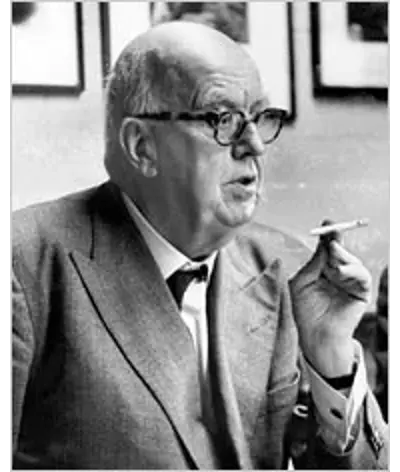
- Born: October 15, 1905
- Died: July 1, 1980
- Nationality: English
- Profession: Chemist, Novelist
Charles Percy Snow, Baron Snow, CBE was an English novelist and physical chemist who also served in several important positions in the British Civil Service and briefly in the UK government. He is best known for his series of novels known collectively as Strangers and Brothers, and for The Two Cultures, a 1959 lecture in which he laments the gulf between scientists and "literary intellectuals".
