Charles Percy Snow Quotes
I felt I was moving among two groups [literary intellectuals and scientists] comparable in intelligence, identical in race, not grossly different in social origin, earning about the same incomes, who had almost ceased to communicate at all, who in intellectual, moral and psychological climate had so little in common that instead of going from Burlington Hom or South Kensington to Chelsea, one might have crossed an ocean.
Snow was one of the first people to call attention to problem of the intellectual gulf between most educated people and scientists. As politicians generally fall into the former group, they have had a particularly difficult dealing with scientific issues since the scientific revolution of the 20th century produced this cultural chasm. See {635974} for one of his conclusions.
C. P. Snow, 1905-1980, British Scientist, Government Scientific Administrator & Man of Letters, The Two Cultures and the Scientific Revolution, 1959
Sourced by: Eigen's Political and Historical Quotations

Snow was one of the first people to call attention to problem of the intellectual gulf between most educated people and scientists. See {635971}. As politicians generally fall into the former group, they have had a particularly difficult dealing with scientific issues since the scientific revolution of the 20th century produced this cultural chasm.
He raised an intellectual alarm that scientists were generally ignorant of the liberal arts and non-scientists were scientifically illiterate. This was not good for society where both were needed for making public policy and developing our society. He was quite influential in British and American higher education where many colleges added required science courses to liberal arts curricula and vica versa. However by the 21st century, the sciences had advanced at such a rapid pace, that the taking of a few college level science courses was not sufficient to produce a scientific literacy, and the problem was no better than in the 1950s.


Typical in most ages is the view that the current generation is not at a par with those that came before.
Snow was one of the first people to call attention to problem of the intellectual gulf between most educated people and scientists. As politicians generally fall into the former group, they have had a particularly difficult time dealing with scientific issues since the scientific revolution of the 20th century produced this cultural chasm. See {635974} for one of his conclusions.


1st Earl of Beaconsfield. See Thomas Jefferson for a similar view.


The writer was born and brought up a Muslim and because he criticizes Islam, he has had a death fatwa issued against him much like Salman Rushdie. His prediction was one of the earliest warnings

Even sophisticated societies have anti-intellectual movements. This happened in revolutionary France, but also at times even in the United States. In 2012, for example, Rick Santorum a candidate for the Republican presidential nomination called President Obama a “snob” for wanting to enable all students to go to college. Santorum was appealing to an anti-intellectual movement in the country that distrusted intellectuals as “elites.”


Muller warns of a very common error made by most politicians and critics who are faced with populism. To ignore them is also self defeating. Best results seem to come from just calmly present factual counter evidence to whatever is being alleged at the moment. And to acknowledge their right in a democracy to think as they do, but we respectfully disagree. The respect is very important in interacting with populists whose major complaint is most often that they are not regarded with dignity in the society as it now exists. And for many educated, above-average intellect people, there is a difficulty in extending their egalitarian philosophy to those who do not honor, respect or even understand the major tenets and norms of intellectual interaction. In most cases, the politicians who have populist appeal not only treat the people with great dignity and appreciation (feigned or real), but take of the cry for their complaints and suspicions in more eloquent oratory that the disaffected people are able to themselves, and that is a great part of the seemingly magic hold that the populist politician seems to have over his constituency.


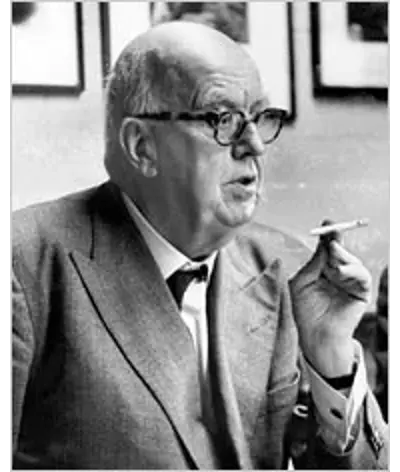
- Born: October 15, 1905
- Died: July 1, 1980
- Nationality: English
- Profession: Chemist, Novelist
Charles Percy Snow, Baron Snow, CBE was an English novelist and physical chemist who also served in several important positions in the British Civil Service and briefly in the UK government. He is best known for his series of novels known collectively as Strangers and Brothers, and for The Two Cultures, a 1959 lecture in which he laments the gulf between scientists and "literary intellectuals".
