Richard Rhodes Quotes
The landed classes neglected technical education, taking refuge in classical studies; as late as 1930, for example, long after Ernest Rutherford at Cambridge had discovered the atomic nucleus and begun transmuting elements, the physics laboratory at Oxford had not been wired for electricity. Intellectuals neglect technical education to this day.
Richard Rhodes, Historian & Journalist, Visions of Technology, 1999
Sourced by: Eigen's Political and Historical Quotations


Citizen of U. S. & Israel

Most scientists do not have the skill or the totality of knowledge to accurately predict the effect of scientific research and learning on society. Many are not interested. Those who try to communicate with politicians and the public are usually met with indifference or suspicion. Above all, the scientific and mathematical literacy of the public is so weak, that it is impossible in much of science to even explain the science to the lay public much less explain its implications. Soddy was a bit of an idealist from a class society and he felt the upper classes should be better informed by scientists.


One major purpose of the patent system is to get inventors to disclose their inventions and explain how they work and in exchange they get a temporary monopoly to profit from the invention. That is why all patents are available to the public so that science can advance if all other see how something was done. Despite the Douglas View, gadgets have been patented if they had some novel element to their functioning.

Born was a refugee who escaped to England from Nazi Germany.
Born was a refugee who escaped to England from Nazi Germany.

The problem effects politics in that politicians and their staffs who have to understand critical concepts cannot even read up on the subject very deeply unless they have experience with the technical vocabulary of the specific field. The result is that are dependent on experts and are unable to reach conclusions for themselves.

Napoleon recognized that technology and science were major factors in innovation and economic development and that mathematics was necessary for that and for economics, and therefore placed a great deal of emphasis on mathematics education. He was a fairly competent mathematically himself having been an artillery officer early in his career.


Access not being free did not refer to tuition, but to the concept of free competition. At the time West Point and Annapolis did not admit students on the basis of meeting any educational preparation or test criteria. A student had to have a political patron for admission. As a result, most colleges and university faculty would have little to do with the service academies and whereas most other schools were making major changes to teach the rapidly changing sciences that were growing, few would interact with the academies. It was during this period that the service academies fell behind academically and never did catch up. Even today a student must be nominated by a politician—usually a Senator of Congressperson. At least today, the applicant must pass reasonable qualification examinations and have a strong high school record. Back in 1869 it was pure politics and Eliot and other Academics saw the schools as extensions of corrupt patronage politics as many student’s families bribed politicians for their sponsorship.

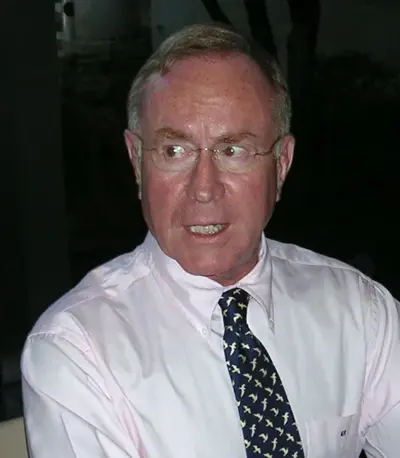
Richard Lee Rhodes is an American historian, journalist, and author of both fiction and non-fiction, including the Pulitzer Prize-winning The Making of the Atomic Bomb (1986), and most recently, Energy: A Human History (2018).
