James Wolfe Quotes
A few regular troops from old France, weakened by hunger and sickness, who, when fresh, were unable to withstand the British soldiers, are their general's chief dependence.


A century later the statement is still true if we consider the number of deaths attributable to the three causes.


This article reached America where the insult proved a patriotic rallying point.


Even a cursory reading of the Koran and early Muslim history would show that there were vast inequalities in the economic order long before the ‘imperialists’ were involved in the Middle East. Throughout the Islamic world there has always been the oppressors and the oppressed and inequality has usually been much worse than in the ‘imperialist’ countries.

The Khmer Rouge starved their political enemies in killing fields.

The Germans had invaded Russia. Most of the world thought the German Army was invincible. Stalin however, was historically right, and with U. S. material and weapons help, the Russians bore the brunt of Allied casualties, but also inflicted more casualties on the Nazi’s and were instrumental in their defeat.

His idea was to send English people who were vagabonds, paupers, failures, and never do wells to America. These people in England were just “waste”. But in America, the could be apprenticed or become indentured servants, learn skill and they would (and indeed did) become the corps of laborers needed to cut down the trees, beat the hemp (for making rope), gather honey, salt and dry fish, dress raw animal hides, dig the earth for minerals, raise olives and silk, and sort and pack bird feathers. In England they were so desperate that they would work in the difficult conditions of the colonies and would be willing to venture out from the country and culture in which they existed—a major problem in getting colonial workers.


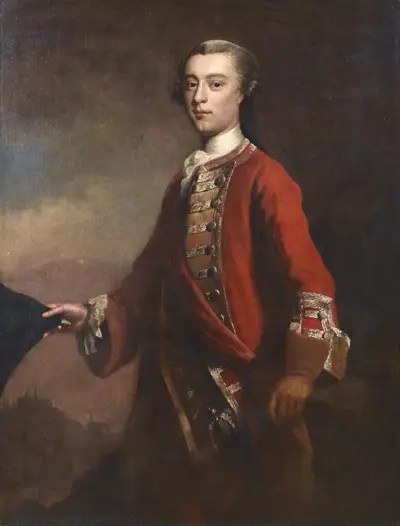
James Wolfe was a British Army officer known for his training reforms and remembered chiefly for his victory in 1759 over the French at the Battle of the Plains of Abraham in Quebec as a major general. The son of a distinguished general, Edward Wolfe, he received his first commission at a young age and saw extensive service in Europe during the War of the Austrian Succession. His service in Flanders and in Scotland, where he took part in the suppression of the Jacobite Rebellion, brought him to the attention of his superiors. The advancement of his career was halted by the Peace Treaty of 1748 and he spent much of the next eight years on garrison duty in the Scottish Highlands. Already a brigade major at the age of 18, he was a lieutenant-colonel by 23.
