Joseph Stalin Quotes
History shows that there are no invincible armies and that there never have been.
The Germans had invaded Russia. Most of the world thought the German Army was invincible. Stalin however, was historically right, and with U. S. material and weapons help, the Russians bore the brunt of Allied casualties, but also inflicted more casualties on the Nazi’s and were instrumental in their defeat.
Joseph Stalin, 1879-1953, Russian Premier, Radio Address "Comrades! Citizens! Brothers and sisters! Men of our army and navy!" July 3, 1941
Sourced by: Eigen's Political and Historical Quotations


He was right. Before WWII Russia was not considered a very important country in the world, but having emerged from WWII, Russia was stronger than ever and counties like Germany and Italy were in ruins.

His response was to being asked whether he could do something with Russian Catholics to help Laval win favor with the Pope, to counter the increasing threat of Nazism. This quotation is often used as an example of Stalin’s disrespect for the Papacy. However, in this case, the Pope was extremely weak politically and some argue spiritually for he did not oppose Hitler and the Nazis very much. Defenders of the Papacy argue that Hitler had overwhelming force and little respect for the Pope, and ironically this was what Stain was referring to. Ironically, another Pope, John Paul, had a major part in bring down the Soviet Union and he had no divisions.


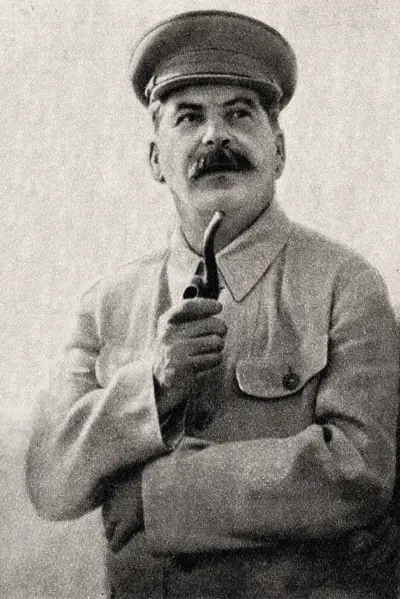
Joseph Vissarionovich Stalin was a Georgian revolutionary and the ruler of the Soviet Union from 1927 until 1953. He served as both General Secretary of the Communist Party of the Soviet Union (1922–1952) and Chairman of the Council of Ministers of the Soviet Union (1941–1953). Despite initially governing the country as part of a collective leadership, he ultimately consolidated power to become the Soviet Union's de facto dictator by the 1930s. A communist ideologically committed to the Leninist interpretation of Marxism, Stalin formalized these ideas as Marxism–Leninism while his own policies are known as Stalinism.
