Daniel Webster Quotes
A disordered currency is one of the greatest political evils.


Conservatives are surprised to learn that their great economic nemesis was one of the early economists who saw the danger of paper money and government control over the minting of money which is one of their core concerns.

At the time the United States was on the Gold Standard and all our money was backed by gold. Root and others were afraid that a Federal Reserve Bank, a proposal that was being debated in Congress, would cause a large amount of paper money to be printed which other nations would obtain through trade and then exchange that for American gold—a process which would deplete the American gold supply. A few years before, William Jennings Bryan had argued that the Gold Standard did not allow America sufficient ability to increase the money supply to serve the growing population and economy. See {640992}.


Describing the currency situation of the country:


The “Fed Note” was the term for a Federal Reserve Note. It was a then a new form of paper money issued by the Federal Reserve Banks instead of the Treasury department as the previous United States Notes had been. The United States was a guarantor of the Federal Reserve Notes in case the Federal Reserve defaulted and there were many who feared having the responsibility to back up the Federal Reserve notes which could be issued by the Federal Reserve Banks—not government entities and not under the control of the President or Congress.


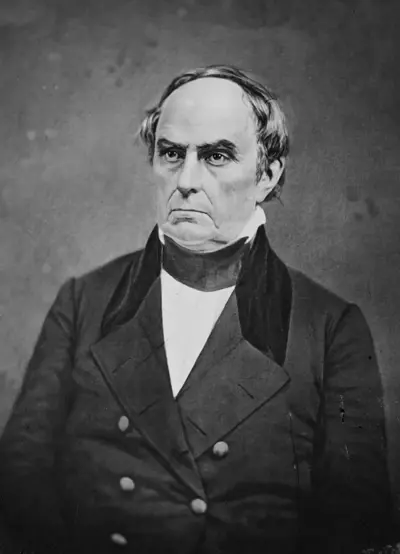
Daniel Webster was an American lawyer and statesman who represented New Hampshire and Massachusetts in the U.S. Congress and served as the U.S. Secretary of State under Presidents William Henry Harrison, John Tyler, and Millard Fillmore. As one of the most prominent American lawyers of the 19th century, he argued over 200 cases before the U.S. Supreme Court between 1814 and his death in 1852. During his life, he was a member of the Federalist Party, the National Republican Party, and the Whig Party.
