Louis Thomas McFadden Quotes
The Fed Note is essentially unsound. It is the worst currency and the most dangerous that this Country has ever known.
The “Fed Note” was the term for a Federal Reserve Note. It was a then a new form of paper money issued by the Federal Reserve Banks instead of the Treasury department as the previous United States Notes had been. The United States was a guarantor of the Federal Reserve Notes in case the Federal Reserve defaulted and there were many who feared having the responsibility to back up the Federal Reserve notes which could be issued by the Federal Reserve Banks—not government entities and not under the control of the President or Congress.
Louis Thomas McFadden, 1876-1936, U. S. Congressman (Republican, PA), Attack on the Federal Reserve Board, House Debate, 1934
Sourced by: Eigen's Political and Historical Quotations

Describing the currency situation of the country:


At the time the United States was on the Gold Standard and all our money was backed by gold. Root and others were afraid that a Federal Reserve Bank, a proposal that was being debated in Congress, would cause a large amount of paper money to be printed which other nations would obtain through trade and then exchange that for American gold—a process which would deplete the American gold supply. A few years before, William Jennings Bryan had argued that the Gold Standard did not allow America sufficient ability to increase the money supply to serve the growing population and economy. See {640992}.


“Pegged” exchange rates are a country’s money where the Government sets the value of the money in terms of some other currency—usually American dollars. The advantage of a pegged currency is that it is stable and does not fluctuate day to day. The disadvantage is that people realize that the value is artificial and other countries will not accept the pegged currency. Worse natives try and get as many dollars as they can because the fear that the Government will devalue and change the rate of exchange of the pegged currency.


The military had made a mess of the Argentine economy and inflation was rampant. Some Argentines turned their Argentine pesos into dollars betting that the Argentine economic situation would get worse, This run from the peso would make it worse. If Argentina stabilized the peso, speculators in dollars would lose money. The Minister trying to discourage a run from the peso, warned Argentinians against the dollar investment. A days later the dollar went up over 30%. Those who had listened to the minister lost much of their money, He was soon forced to resign by the military dictators who controlled the government.

The same argument can be made against the modern paper money supply. What Jefferson and most of the founding fathers, with the exception of Alexander Hamilton. did not realize was that the major stability of any kind of money was not only the silver or gold that backed it but the political and legal stability of the nation and the size of its productive economy. Where Jefferson was right however is that all these banknotes at the time were issued by local private banks. The Government had no responsibility for paper money and had no knowledge of how much paper money any bank issues and whether or not they had any silver to back it up. Banks didn’t trust other bank’s notes and would only redeem them at a discount. A $10 note from a South Carolina bank might only be worth $7 in New York and $6 in Boston. The early American monetary system was a mess.

There actually are restraints on how much paper money a government will issue, but unlike with a gold standard where the restraint is external and controlled by how much gold the country can amass. However, with paper money the restraints area all internal. If too much money is printed, the value of the money relative to gold, silver and other nation’s money will go down and imports will become more expensive. Excessive printing of money can easily produce inflation. However, the internal restraints can be overcome by the government’s need to raise money for war, debt or other purposes. So Paul and many other politicians have a deep distrust of paper money not backed by Gold or Silver. In the United States however, the Government does not control the money supply or the printing policies of money. This is under the control of the Federal Reserve Board which while appointed by President’s as terms expire, have a great deal of independence both from the Executive and Legislative Branches. For that reason Paul is even more distrustful when the Federal Reserve decides to print money. See {629491} for his unsuccessful effort to abolish the Federal Reserve Bank.


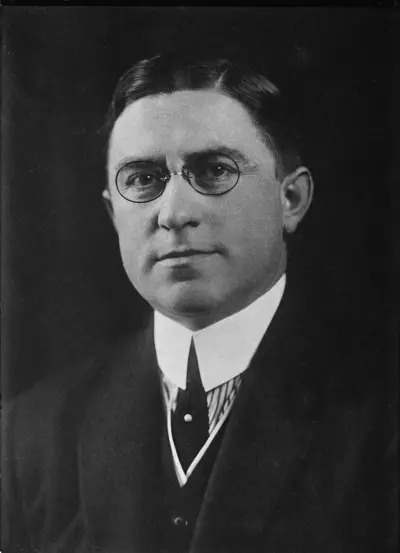
Louis Thomas McFadden was a Republican member of the United States House of Representatives from Pennsylvania, serving from 1915 to 1935. A banker by trade, he was the chief sponsor of the 1927 McFadden Act, which rechartered the Federal Reserve System in perpetuity, liberalized branch banking for national banks and increased competition between member and non-member banks. He later became an opponent of the Federal Reserve System and anti-Semitic conspiracy theorist.
