John Marshall Quotes
A defenseless country cannot be secure.
Arguing for a standing army:
John Marshall, 1755-1835, Chief Justice of the U. S. Supreme Court, U. S. Congressman (Federalist, VA), U. S. Secretary of War, U. S. Secretary of State, Quoted in Oster, The Political and Economic Doctrines of John Marshall, 1914
Sourced by: Eigen's Political and Historical Quotations


The bipartisan Presidential Commission had unanimously made 41 recommendations to prevent future terrorist attacks. While the Bush Administration and Congress implemented a few many of the more critical ones were left unaddressed. The commission on its final day issued a report card giving failing grades to both the White House and the Republican-controlled Congress.


Earlier in the Arab-Israeli conflict United Nations troops were stationed at the borders to prevent either side from attacking the other. The Arabs mounted a major attack and the United Nations troops ran and did not fight. Ever since then, Israel policy was never to depend on any other than Israel to defend the country and the people.


Johnson was then the Assistant Secretary Of War.

Manava Dharma Shastra. Espionage and counter espionage was called for in “good government Ancient Hindu style.” This text is a part of the Hindu Holy Texts. Hindus believe that Manu was a prophet whose text is revealed or inspired.


Criticizing the failure to follow reasonable procedures and laws:


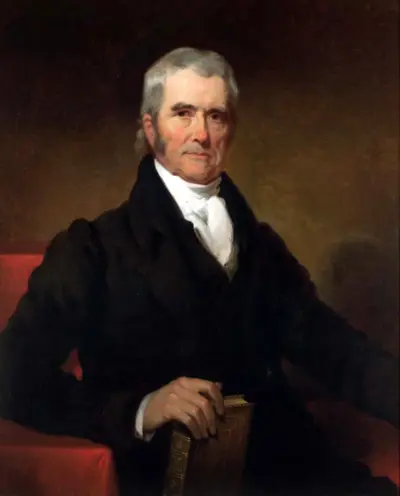
John Marshall was an American politician and lawyer who served as the fourth Chief Justice of the United States from 1801 to 1835. Marshall remains the longest-serving chief justice and fourth-longest serving justice in Supreme Court history, and he is widely regarded as one of the most influential justices to ever sit on the Supreme Court. Prior to joining the Supreme Court (and for one month simultaneous to his tenure as Chief Justice), Marshall served as the United States Secretary of State under President John Adams.
