Friedrich Hayek Quotes
A claim for equality of material position can be met only by a government with totalitarian powers.
Friedrich A. Hayek, 1899-1992, Austrian Economist and Political Philosopher, Nobel Laureate in Economics, Law, Legislation and Liberty: A New Statement of the Liberal Principles of Justice and Political Economy, 1982
Sourced by: Eigen's Political and Historical Quotations

The Catholic view on the subject varied from time to time, even with the same Pope. See {360616} for another quote from this Pope that gives a different point of view.


In modern America, there are two political views of this notion. The one held by a small majority of the population is Trenchard’s quotation taken literally. Their view is that there if the is no way to maintain liberty if there is too wide a gap between the rich and the rest of the population. The second variant, held by many conservatives limits the equality to equality of opportunity. They are loathe to take any position that says that any gap between the rich and the remainder of the citizens might be too large. They would particularly disagree with the first sentence of another Trenchard quotation, {627024}.

At the time English democracy was still suspect especially among the aristocracy.


Actually originated by William Jennings Bryan in a 1900 campaign speech. See {640984} . The slogan became the name and first line of a poem and also a song. See {609937}


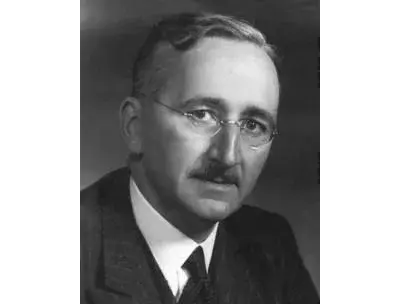
- Born: May 8, 1899
- Died: March 23, 1992
- Nationality: Austrian
- Profession: Economist
Friedrich August von Hayek CH FBA, often referred to by his initials F. A. Hayek, was an Austrian-British economist and philosopher who is best known for his defence of classical liberalism. Hayek shared the 1974 Nobel Memorial Prize in Economic Sciences with Gunnar Myrdal for his "pioneering work in the theory of money and economic fluctuations and [...] penetrating analysis of the interdependence of economic, social and institutional phenomena". His account of how changing prices communicate information that helps individuals co-ordinate their plans is widely regarded as an important achievement in economics, leading to his Nobel Prize.
