Theodor Herzl Quotes
Zionism demands a publicly recognized and legally secured homeland in Palestine for the Jewish people. This platform is unchangeable.
Herzl, Theodor. "Opening Address at the Second Zionist Congress." Zionist Writings: Essays and Addresses, vol. 1, translated by Harry Zohn, Herzl Press, 1973, p. 285.

This is the first statement of a Jewish nation since Biblical Times.


Wilson did so later: {585123}. Wilson was not the only early American President who had “Zionist” aspirations for Palestine. See John Adams quotation: {585141}.


Often referred to as the "Balfour Declaration." 1st Earl of Balfour

There was a strong movement among the early religious Christian Americans to go to the Holy Land to reclaim the Kingdom God promised in the Bible. American missionaries went to the Middle East. See {585147} for another early American politicians view.

of the Jewish refugees from the German concentration camps
This quotation is very surprising for most people. Reading the text alone, most of us would assume that it came from someone when the Zionist movement was fighting for a Jewish homeland in what is now Israel. Or just before the UN decision in 1947 to partition Palestine. However, it came from one of our founding fathers in Colonial times. Adams was by no means the only Founding Father with this point of view. Fundamentalist Protestants have put much credence in God’s granting the area for the Jewish People—then as today.


The recommendation for partition was the basis of the decision of the United Nations in 1949 to partition Palestine.


He also expressed his pleasure with the British Balfour Declaration granting the Jews their own country in part of Palestine ({594001}). Wilson had earlier committed himself to support the Zionist claim for Palestine. See {585124}.
at the First World Zionist Congress, 1897


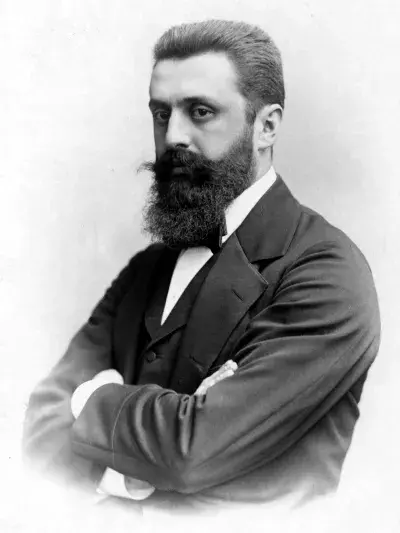
Theodor Herzl was an Austro-Hungarian Jewish journalist, playwright, political activist, and writer who was the father of modern political Zionism. Herzl formed the Zionist Organization and promoted Jewish immigration to Palestine in an effort to form a Jewish state. Though he died before its establishment, he is known as the father of the State of Israel.
