Francis Bacon Quotes
Young people are fitter to invent than to judge; fitter for execution than for counsel; and more fit for new projects than for settled business.


The willingness to fail with a policy or program is very rare amongst politicians and almost nil with government bureaucrats. For the latter the main reason is Congress which pillories the Civil Servants or their and their political bosses for any failure. So nothing innovative gets tried in most administrations. Franklin Delano Roosevelt, who went to the people with the intention to try. many different things and would fail with many, was tolerated by a Congress which he dominated and a public that was so desparate as a result of Hoover’s trying nothing to ameliorate the Great Depression that they were willing to accept some failures. And indeed there were a number of failures, some very large and significant. But there were also many successes and Franklin Delano Roosevelt, experiments, failures and all was the most popular President in American history and was elected to 4 terms before his death.

This is a very important quotation. In large part America's development to a great power was the result of American industry and enterprise. However, that characteristic among the Americans was rare in the South as de Tocqueville herein observes. This was one of the pernicious consequences of slavery. The Southern whites could live a very comfortable life without any ingenuity, innovation, hard work, passion or much effort of any kind. There was nothing that the South produced or created without slaves that anyone wanted or advanced the nation. Even after the Civil War and emancipation it took decades before the white Southerners began to adopt the enterprising behavior that the rest of America was known for and it would take until the 21st century for parts of the South the reach parity in this area with most of the rest of the nation.


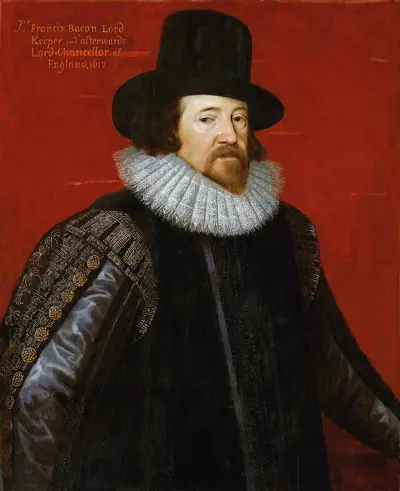
Francis Bacon, 1st Viscount St Alban, Kt PC QC, also known as Lord Verulam, was an English philosopher and statesman who served as Attorney General and as Lord Chancellor of England. His works are seen as developing the scientific method and remained influential through the scientific revolution.
