Ten Bears Quotes
You said that you wanted to put us upon a reservation, to build our houses and make us medicine lodges. I do not want them. I was born upon the prairie, where the wind blew free, and there was nothing to break the light of the sun. I was born where there were no enclosures, and where everything drew a free breath. I want to die there, and not within walls.
Ten Bears, Comanche, 1867
Sourced by: Eigen's Political and Historical Quotations

Justifying selling part of the reservation as a waste dump to the distress of neighbors:
The Iroquois were very sophisticated diplomatically and had appointed Garangula, a chief of one of the Iroquois tribes, to be their Ambassador Plenipotentiary in negotiations with the French. The French had a number of complaints one of which was that the Iroquois had brought English traders into areas that the French regarded as their hegemony. Yonnondio was the name the Indians had given to the La Barre and Corlear, another powerful French Official. The French had threatened the Iroquois with war. In polite diplomatic terms, Garangula told the French to mind their own business and if war was what they wanted, war would be. Actually, the Iroquois had a more formidable and better organized military capability than did the French at that time. The French did not realize the sophistication of the Iroquois the way the English did, and thought that they could easily be intimidated. Note the Iroquois emphasis on their freedom.


Those who support the right of the individual woman to use contraception or have an abortion cite this quotation to illustrate this early statement of the right of a person to have control over his or her own body.

In 1937 the U. S. Treasury Department commissioned a pair of large murals to decorate the lobby or the Ariel Rios Federal Building in Washington DC. On the mural was depicted a U. S. Mail Service from Alaska to Puerto Rico. It showed four Puerto Rican women reading a letter in the Inuit dialect presumably delivered from Alaska. The authorities loved the mural until they discovered the translation of the Inuit letter. This was a direct reference to the Puerto Rican Nationalist Independence Movement. That year 18 Puerto Rican Nationalists were killed and over 100 wounded when police fired into a crowd of demonstrators on March 21. Kent, a famous artist, planted a newspaper story with the translation and soon media all over the company were drawing attention to the Puerto Rican movement, just as Kent had intended.


Standing Bear and some other Indians left the Indian territory where the government had assigned their tribe and with an invitation went to live on another Indian reservation designated for another tribe. The Government sent the military police to take the Indians back to the Indian Territory. The Indians claimed that they had the right to live wherever they wanted and did not have to live in the place the government had assigned them. The Indians won and since then, Indians like all other Americans were free to go wherever in the country that they wanted so long s they were not trespassing or violating other laws.


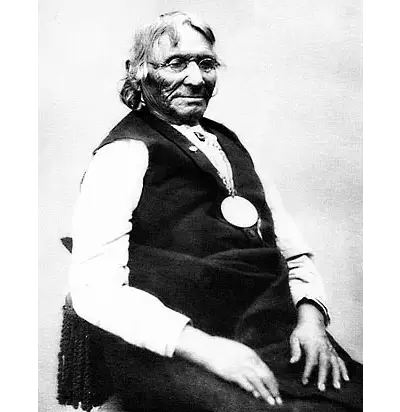
Ten Bears (Comanche Pawʉʉrasʉmʉnurʉ) was the principal chief of the Yamparika or "Root Eater" division of the Comanche from ca. 1860-72. He was the leader of the Ketahto ("The Barefeet") local group of the Yamparika, probably from the late 1840s.
