Elmer S. Dundy Quotes
That the Indians possess the inherent right of expatriation, as well as the more fortunate white race, and have the inalienable right to "life, liberty, and the pursuit of happiness," so long as they obey the laws and do not trespass on forbidden ground
Standing Bear and some other Indians left the Indian territory where the government had assigned their tribe and with an invitation went to live on another Indian reservation designated for another tribe. The Government sent the military police to take the Indians back to the Indian Territory. The Indians claimed that they had the right to live wherever they wanted and did not have to live in the place the government had assigned them. The Indians won and since then, Indians like all other Americans were free to go wherever in the country that they wanted so long s they were not trespassing or violating other laws.
Elmer S. Dundy, 1830-1896, Federal Judge, United States, ex rel. Standing Bear, v. George Crook, a Brigadier-General of the Army of the United States
Sourced by: Eigen's Political and Historical Quotations


While Jefferson was clear on this point, there were other forces and points of view that did not recognize Indian rights and were prepared to use force to obtain Indian lands. These, together with some Indians who made bad and sometimes corrupt bargains and treaties ceding land, produced the loss of most of the Indian land in America.


This was the first named Civil Rights Act passed in the United States. It was passed over the veto of President Andrew Johnson, a Southerner, who tried to thwart Congress’s efforts at Reconstruction.
Jefferson had deliberately modified John Locke’s phrase “life, liberty and property.

In the only presidential Special Message to Congress on the subject of Indians in American history:
This quotation has been used by gay rights advocates. Opponents argue that a gay lifestyle is not “innocent” in that it is Biblically prohibited. This brings the issue of separation of church and state into the argument.
Those who support the right of the individual woman to use contraception or have an abortion cite this quotation to illustrate this early statement of the right of a person to have control over his or her own body.


The intentions of the Founding Fathers towards the Indians was decent, respectful, and well intentioned. However, there was not enough of a system of enforcement or the will to enforce when the greed of the average whites grew too great. Many settlers saw these vast lands and could not see any harm in using a few acres for their farm. And if there had been only a few, there would have been little trouble. However, the settlers kept coming and coming and soon the Indians began to push back. In a sense, it was a class problem. The members of the Continental Congress who wrote the Northwest Ordinance were educated, affluent men who had plenty of land. Most of the men who contested for the Indian lands had little land or were newly affluent and saw few limits to America.


It was drafted by John Adams. 9 Years later the French in their Revolution used the first clause in their Declaration of the Rights of Man and of the Citizen—See Quotation 602404 For an opposite point of view see Quotation 635927.
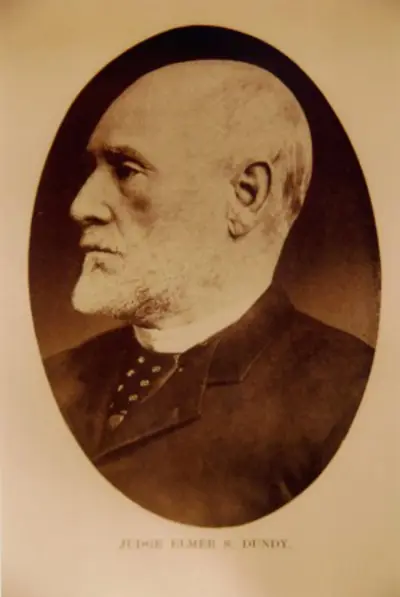
Elmer Scipio Dundy was a United States District Judge of the United States District Court for the District of Nebraska. He was the namesake of Dundy County, Nebraska.
