Margaret Shove Morriss Quotes
You owe it to the community not to be swerved by eloquence and specious argument.
Margaret Shove Morriss, Address to the Pembroke College Students, June 16, 1924
Sourced by: Eigen's Political and Historical Quotations

1968 was one of the more polarized presidential elections, and most politicians in the heat of debate, tended to make ad hominem attacks on their opponents instead of rational arguments. Conservatives tended to attack opponents as communists, communist sympathizers, or giving aid and comfort to the communists. Often they never got around to attacking the real political position of their opponents. Buckley realized that he would not persuade many of his fellow conservatives to eschew the personal red-baiting on their opponents. Their political; base demanded this. But he urged them to restrain themselves and first make a rational attack on liberalism and liberal policies. Very few took his advice that year or ever in the remainder of the century until the fall of the Soviet Union.


_0_thumbnail_47x47.jpg)
In politics, this is one of the reasons why legislative debates will rarely change any minds or positions. The politician and his party are defined in part by his previous positions. In legislative debate, he is maintaining and supporting those positions. Scientifically, the best way to have a shot at changing a politicians position with new evidence, is to present it privately, in a 1 on 1 situation. Even if the politician has a member of his staff present, he is conscious of showing his staff member what he is not easily manipulated and will stand up for principles and the party.


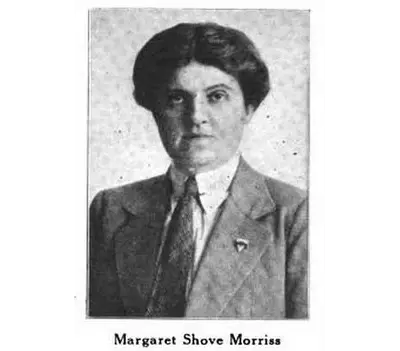
Margaret Shove Morriss (1884-1975), fourth dean of the Women’s College and of Pembroke College, was born in Baltimore on June 25, 1884. She graduated from Goucher College in 1904 and earned her Ph.D. degree from Bryn Mawr in 1911. Miss Morriss was an early advocate of the responsibility of women to use their education outside the home and the ability of women to accept leadership positions in society. She served as national president of the American Association of University Women from 1937 to 1944, and as president of the New England Association of Schools and Colleges in 1941. She was a member of the League of Women Voters and the Consumers’ League, and a consultant to the Secretary of War during World War II. She was awarded honorary degrees by Russell Sage College, Goucher College, Mount Holyoke College, and Rhode Island State College. Morriss Hall on the Pembroke Campus was named for her in 1960.
