George Carlin Quotes
You know what they want? They want obedient workers. Obedient workers, people who are just smart enough to run the machines and do the paperwork. And just dumb enough to passively accept all these increasingly shittier jobs with the lower pay, the longer hours, the reduced benefits, the end of overtime and vanishing pension that disappears the minute you go to collect it. And now they're coming for your Social Security money. They want your f**kin' retirement money. They want it back so they can give it to their criminal friends on Wall Street.
Carlin, George. Life Is Worth Losing. HBO, 2005. Performance.

McConnell had become very rich as a senator despite the relatively modest salary paid to members of Congress. As soon as Grimes announced her candidacy, McConnell launched a serious of negative attack ads to try and define her negatively for the voters. She then retaliated. This is one of her retaliations. The campaign was a good example of Congressional races then where candidates spend very little time and resources telling the voters what they were for. Instead they spend their resources and efforts on stating what is wrong with their opponent. Grimes lost to the incumbent who outspend her in their mutual attack campaign. McConnell never did explain how he had become so wealthy.

At the time many workers lived in housing owned by their employer. When the Pullman company had a labor dispute, they not only locked the workers out of their jobs but evicted them from their meager housing.


See Franklin Delano Roosevelt {32528} for the basic principle of progressive taxation.


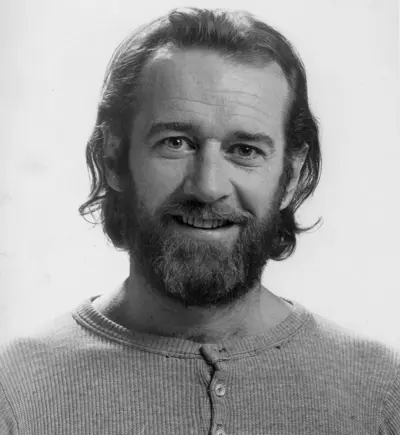
George Denis Patrick Carlin was an American stand-up comedian, actor, social critic, and author. Regarded as one of the most important and influential stand-up comics of all time, he was dubbed "the dean of counterculture comedians". He was known for his dark comedy and reflections on politics, the English language, psychology, religion, and taboo subjects. His "seven dirty words" routine was central to the 1978 United States Supreme Court case F.C.C. v. Pacifica Foundation, in which a 5–4 decision affirmed the government's power to censor indecent material on the public airwaves.
