Dick Cheney Quotes
You have an obligation to try and make news. I have an obligation not to make news.
Richard Cheney, Vice President of the United States (Republican, WY), U. S. Congressman (Republican, WY), U. S. Secretary of Defense, Interview, ABC This Week, April 8, 2001
Sourced by: Eigen's Political and Historical Quotations


Many historians believe that Cheney really knew how to manipulate the President. In this case, he left the President with the feeling that if he did not strike at Saddam, he was somehow weak. Bush was a Texan who viewed many things in the perspective of the old West. Also Bush’s father had not “taken care” of Saddam earlier and the right wing war hawks portrayed him as “weak.” for not finishing Saddam off. See {621248}

He was criticized by the right wing extremists of the Repuplican Party for serving a Democratic President (Obama) as Ambassador to China. He was the most qualified person for the job as he was an experienced politician, spoke Chinese fluently and was very knowledgeable about Chinese culture and history. The President had asked him rather than many people of his own party. Huntsman’s quotation is probably the most patriotic and eloquent statement of national service ever made.

President Theodore Roosevelt took and extended trip to the West and left William Howard Taft, then the Secretary of War, as the acting President and NOT the Secretary of State who many people erroneously think is the senior member of the cabinet, nor the Vice President. Roosevelt just put in charge the man he was most comfortable with. Interestingly, neither the Vice President or the Secretary of State objected or were disappointed. It was generally acknowledged that Taft was the best and strongest leader in the cabinet and that he was as close to the president as possible. See {639910}

And the New York press is probably the most difficult and cynical in the world.


The reporters were not intimidated. They published not only the story about the joke but the threats of the Chief of Staff who later apologized publicly to minimize the political damage. The quotation is important for two reasons. First it illustrates something that occurs in all countries—political officials intimidating journalists to suppress a story they do not want public. Second, the vibrancy of the Israel freedom of the press, where even the highest ranking general in the nation could not intimidate ordinary journalists. In most counties, the journalists would have been imprisoned, and possible tortured and killed if they crossed such a powerful man. In many democracies, the journalists would have been fired.

Dyson was explaining the problem of Black authors getting published and having the forum for their views in particular and Black views in general. Dyson however, did not appear to take the Internet and the bloggers into account at the time. We are not far from the time that printed books will be obsolete and they will be distrusted electronically. When that is so,the classic publisher role as a gatekeeper, will end.

His present position was that of the Republican nominee. In that era, nominees for president were not expected to speak and campaign after they had won the nomination.


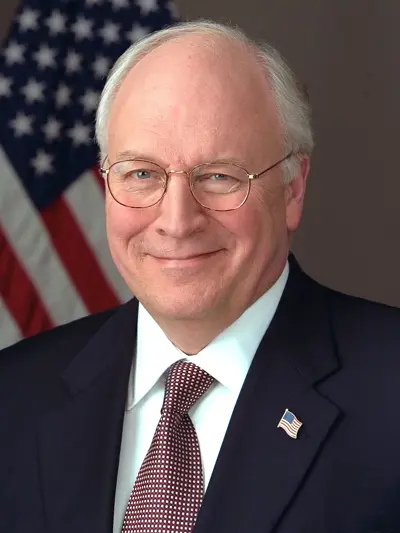
Richard Bruce Cheney is an American politician and businessman who served as the 46th vice president of the United States from 2001 to 2009 under George W. Bush. He has been cited as the most powerful vice president in American history. He is also one of the most unpopular American politicians, holding an approval rating of just 13% upon leaving office. Cheney has been the oldest living former U.S. vice president since 2021, following the death of Walter Mondale.
