Carl Sandburg Quotes
You come along squirting words at us, shaking your fist and calling us all dam fools so fierce the froth slobbers over your lips...always blabbing we’re all going to hell straight off and you know all about it...Go ahead and bust all the chairs you want to. Smash a whole wagon load of furniture at every performance. Turn sixty somersaults and stand on your nutty head. If it wasn’t for the way you scare the women and kids I’d feel sorry for you and pass the hat. I like to watch a good four-flusher work, but not when he starts people puking and calling for the doctors
Sunday put on a very dramatic show, often breaking furniture. Many intellectuals at the time thought him, as opposed to many other Christian Evangelists, a self-serving fraud. Defenders claimed that they targeted him because he was so effective.
Carl Sandburg, 1878-1967, Poet and political biographer, "To Billy Sunday", 1915
Sourced by: Eigen's Political and Historical Quotations


Asked to comment on the "steadiness" of then incoming president, George W. Bush:

McNickle claimed to have quoted her in an article and she did not say it and she was angry that he had put words in her mouth. Most political spouses would just suffer in silence, and if they did respond would do so in very polite and in the case of women “ladylike: terms. Ms. Kerry however was not only a very successful business woman but also was one of the richest women in America who had been in the tussles of male battles before

Chavez frequently insulted officials and leaders of other countries. See linked quotes for examples.


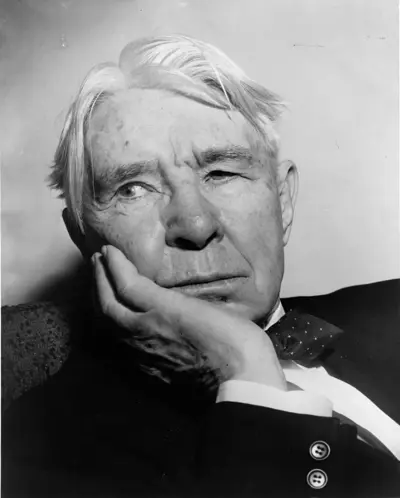
Carl August Sandburg (January 6, 1878 – July 22, 1967) was an American poet, biographer, journalist, and editor. He won three Pulitzer Prizes: two for his poetry and one for his biography of Abraham Lincoln. During his lifetime, Sandburg was widely regarded as "a major figure in contemporary literature", especially for volumes of his collected verse, including Chicago Poems (1916), Cornhuskers (1918), and Smoke and Steel (1920). He enjoyed "unrivaled appeal as a poet in his day, perhaps because the breadth of his experiences connected him with so many strands of American life", and at his death in 1967, President Lyndon B. Johnson observed that "Carl Sandburg was more than the voice of America, more than the poet of its strength and genius. He was America."
