Winston Churchill Quotes
You are so aggressive that not content with struggling against Germany, Italy and Japan, you want to take on Britain and America.
Winston Churchill, 1874-1965, British Prime Minister (Conservative), Remark to Charles De Gaulle, Quoted in Jean Lacoulture, De Gaulle: The Rebel, 1990
Sourced by: Eigen's Political and Historical Quotations

Ironically it was not the military situation that inhibited FDR. He did not fear the military of Germany, but he had a very isolationist Congress to contend with and a right wing America First movement of Nazi German sympathizers including hero Charles Lindbergh and Roosevelt’s own Ambassador to Great Britain, Joseph P. Kennedy. It was finally Germany who declared war on the United States after the attack on Pearl Harbor.

The Spanish had been beaten and bloodied by England, but no one else until Napoleon would come along later. So it was easy for Spain to bully and dominate the non-English countries.

After the sneak attack on Pearl Harbor, Stimson drafted the Declaration of War that President Roosevelt would ask Congress to vote for. However, there was a small but very vocal group of extreme Republican conservatives who opposed assisting England against Hitler and saw German and Italian Fascism as positive forces. They would oppose any administration declaration of war against Germany and Italy who had not yet attacked any American facilities. The President realized that German and Italy had a Mutual Defense Treaty with Japan, and when we declared war against Japan, would have to ally with Japan or reneg on their treaty. So FDR removed Germany and Italy from the Declaration and Congress just declared war against Germany. In the next days, Germany and Italy declared war against the United States, and the de facto situation was as Stimson had drafted it, but FDR had not given the right wing American Fascist sympathizers any issue to criticize the administration.

At first glance, the reader might think that this quotation in a leading university newspaper was from the Vietnam War era. However, it was argument against U. S. involvement in World War II. There was a very negative reaction to Wilson’s visions and claims for the First World War which never did come to pass that stuck with many.

The Dutch Monarch William V, Prince of Orange, was in a very precarious position and might be deposed. Officially Harris and the British were supporting him and Harris was giving him money to firm up his regime, but their great fear was that the French would support and control the Patriot Revolutionary movement, then quite active or even intervene militarily to aid the Patriots.


Boggs was working on some compromise positions that could be taken by the party at the 1968 Democratic National Convention to provide the anti war wing of the party with something. The President found out and met with Congressman Boggs.
President Polk and General Zachary Taylor will not He was the last President before Texas became a State. Most of us are surprised that the Texas President opposed the Mexican War.
The Israeli Foreign Minister conveyed to the President the suggestion of French President De Gaulle that the "Four Great Powers" ought to get together:
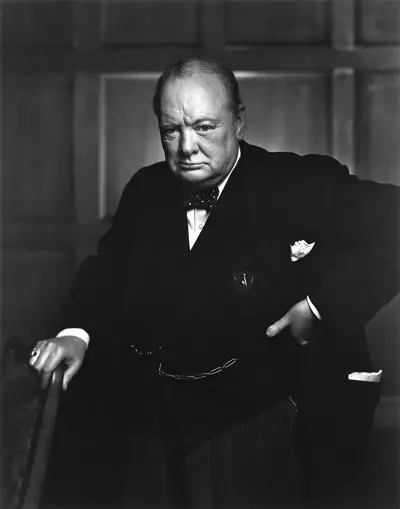
Sir Winston Leonard Spencer Churchill, KG, OM, CH, TD, DL, FRS, RA was the Prime Minister of the United Kingdom from 1940 to 1945, during the Second World War, and again from 1951 to 1955. Apart from two years between 1922 and 1924, Churchill was a Member of Parliament (MP) from 1900 to 1964 and represented a total of five constituencies. Ideologically an economic liberal and imperialist, he was for most of his career a member of the Conservative Party, as leader from 1940 to 1955. He was a member of the Liberal Party from 1904 to 1924. Churchill was also well known for his military career and as a historian, painter and writer, and among his many awards was the Nobel Prize in Literature.
