Nicolaus Copernicus Quotes
Yet if anyone believes that the earth rotates, surely he will hold that its motion is natural, not violent.
Copernicus, Nicolaus. On the Revolutions. Translated by Edward Rosen, Johns Hopkins University Press, 1992, p. 15.

He was the first known person who realized that the earth revolved rapidly about its own axis—which few believed in his day and into modern times until Copernicus (See {590327}). Intuitively, most people assumed that if the earth were spinning, the people and things would fly off. Most ancients believed that the earth was stationary and the heavens were moving because they could see the stars move.


While critics of Islam cite this sura to show how absurd the Koran can be and contradicts what is known about the Earth’s orbit, few sophisticated, moderate Muslims believe this. However, even in the United States there are many Christians and Orthodox Jews who not only deny Evolution but also believe the Earth is 6000 years old. The basic difference is that in Islamic countries publicly critiquing such anti-scientific theological statements is rare and an individual who publicly argues against the Koran taken literally is often in danger from state or private retribution. In the West the conflict between the Bible and known science is not only publicly commented upon but in a somewhat derisive way. However, consider this: Islam is about 1500 years old. When Christianity was the same age, Galileo was tried and convicted by the Catholic Church for denying this very statement. Perhaps in another 700 years Muslims will look back with embarrassment on this as most of Christianity does.


Note that Da Vinci predated Galileo. One big difference was that Da Vinci did not publish his heretical views, but wrote them in his private notebook. The church authorities likely did not know about his heresy.

This quotation is noteworthy because one of the great church scholars had conflated astronomy and theology and ruled that one view of the universe—that the earth rotated around the sun was not just a scientific intellectual discussion. But the earth would not be eternal and that refuted the doctrine that God made earth to be eternal. This presaged the conflict that Galileo would have with the church a few centuries later.
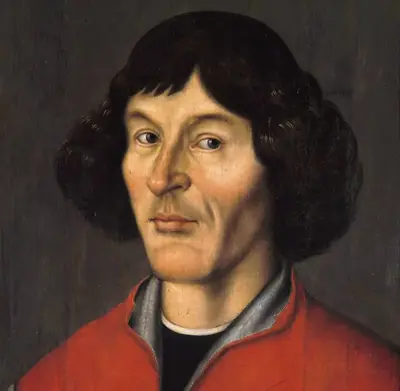
Nicolaus Copernicus was a Renaissance-era mathematician, astronomer, and Catholic canon who formulated a model of the universe that placed the Sun rather than Earth at its center. In all likelihood, Copernicus developed his model independently of Aristarchus of Samos, an ancient Greek astronomer who had formulated such a model some eighteen centuries earlier.
