Patrick Kavanagh Quotes
Yeats, protected to some extent by the Nationalistic movement, wrote out of a somewhat protected world, and so his work does not touch life deeply.
Kavanagh, Patrick. Collected Pruse. MacGibbon & Kee, 1967.


This mode of national definition is characteristic of many nations of Europe as well.


Very few countries make such overt recognition of the arts and their cultural heritage a part of their constitutions. Even nations which are fanatic about their cultures such as France do not have such overt constitutional provisions.


This parochial and sectional point of view was held much more strongly by the South and to a great extent, still is. We are all conflicted by wanting and American culture (that can be adopted by the world in globalization) and also wanting local customs, cultures, norms, policies and thought patterns to exist. However, there is inevitable conflict between the two, so it is a constant American source of debate, ebb and flow.


Note the belief that the author has the belief that over time homogeneity is important in a state, whereas the most successful modern states have been ones that are diverse—i.e. America, Britain, China, France. There have been some small successful states like Norway that are homogeneous, but large states need the heterogeneity.
See {640102} and {640101} for his view of what a nation is not.
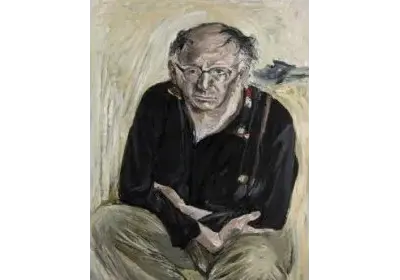
Patrick Kavanagh was an Irish poet and novelist. His best-known works include the novel Tarry Flynn, and the poems "On Raglan Road" and "The Great Hunger". He is known for his accounts of Irish life through reference to the everyday and commonplace. He also played as a goalkeeper for his local Gaelic football club.
