Andrew Jackson Quotes
Without union, our independence and liberty would never have been achieved; without union they never can be maintained.
Andrew Jackson, 1767-1845, 7th President of the United States (Democrat, TN), Second Inaugural Address, March 4, 1833
Sourced by: Eigen's Political and Historical Quotations

The then Vice President was accosted on the train by southerners who believed that he was on his way to his home state of Tennessee to persuade the legislature not to secede from the union. Amid cries to hang him and after he was punched by one of the mob, ex-Senator Wigfall—the man who had received the surrender sword at Sumter, who was also on the train, persuaded the crowd to hear Johnson out. Johnson thus began his speech which was potentially for his life, but never wavered from his view that secession was a mistake. Most of the crowd calmed down and as the train pulled out, they let him go though there were still a few shouts for “hanging.” There was no secret service protection for the President or vice President at the outbreak of the Civil War. Pinkerton had organized some informal protection for the President and thwarted some plots, but it was the Vice President who was attacked first. And there was not sufficient protection to prevent Lincoln’s assassination.


He persuaded many other rulers to join the Indian Union when India became Independent.
Almost all unions generally support the Democratic Party and labor is generally unified behind the Democrats. However, whenever union solidarity is breached and one or two major labor unions support the Republicans they almost always win.

The unions that broke off were very successful at increasing union membership and made large efforts at organizing. The others were losing members for the most part and devoted most of their resources to politics to protect what they had.


Sadova was a major battle where the Prussians defeated the Austrians. It was known to all Germans as historically key to developing a German nation.


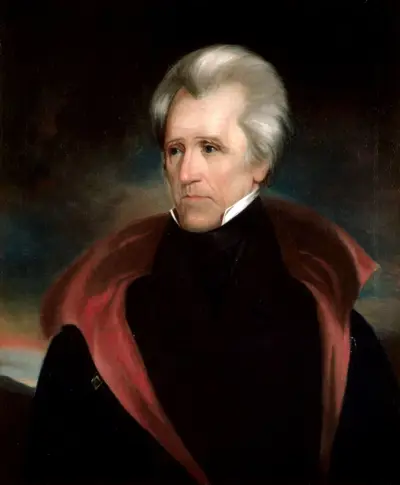
Andrew Jackson was an American lawyer, soldier, and statesman who served as the seventh president of the United States from 1829 to 1837. Before being elected to the presidency, Jackson gained fame as a general in the United States Army and served in both houses of the U.S. Congress. An expansionist president, Jackson sought to advance the rights of the "common man" against a "corrupt aristocracy" and to preserve the Union.
