Andrew Roberts Quotes
With their own record of killing 12 million American Indians and supporting slavery for four decades after the British abolished it, Americans wish to project their historical guilt on to someone else.
Roberts, Andrew. A History of the English-Speaking Peoples Since 1900. HarperCollins, 2006.

Up until 1970 many Australian Aboriginal children were forcibly removed from their homes and “adopted” or brought up in institutions to “civilize” them. In 1997 the Australian Human Rights and Equal Opportunity Commission found the practice “genocidal.”


This quotation distressed many ultra rightists who otherwise were avid followers of Mises. See {632407} for another quotation that distressed many European conservative devotees of Mises.


What is interesting is that when he cites the dreadful facts about American slavery, he never points out that the American slave traders rarely raided the villages and captured the slaves themselves. Most often this was done my Khamenei’s Muslim brethren slave traders who dominated the slave trade in Africa. Nor does he point out what after realizing the evil that Americans perpetrated with slavery, we ended it in the 1860s. Saudi Arabia, the central nation of Islam, did not make slavery illegal until 100 years later, and even today, there are many Saudi’s who get caught practicing slavery with household servants and forms of indentured servitude. And while Christians and the Bible tolerated slavery, the Koran and the Prophet never once condemn the practice of slavery. Democracy at any point in time is not always morally right, but it is a process by which under pressure from the people it improves over time because the people can change it and do.


From a phone interview conducted by the article author.

That is exactly what happened. The Spanish raped and interbred with the native women in the Americas and it was their offspring who ended up dominating South and Central American societies.

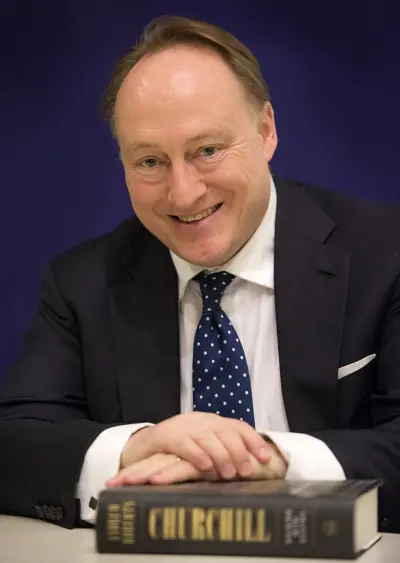
Andrew Roberts FRHistS FRSL is an English historian and journalist. Educated at Gonville and Caius College, Cambridge, where he earned a first-class degree in Modern History and a PhD, he is a Visiting Professor at the Department of War Studies, King's College London, a Roger and Martha Mertz Visiting Research Fellow at the Hoover Institution at Stanford University and a Lehrman Institute Distinguished Lecturer at the New-York Historical Society. He has been a trustee of the National Portrait Gallery, London since 2013.
