Douglas Brinkley Quotes
With the newspapers cheering, Lieutenant Colonel Roosevelt chose a top-notch regiment of more than 1,250 men. They were first called Teddy's Texas Tarantulas and went through three or four other monikers until Roosevelt's Rough Riders stuck.
Brinkley, Douglas. The Wilderness Warrior: Theodore Roosevelt and the Crusade for America. HarperCollins, 2009, p. 319.


he always called him by his first name The name Mad Anthony Wayne stuck.

This quotation is important for two reasons. First, this is one of the most negative attacks on an opponent in a Presidential election in all of American History—to call the opponent ‘dangerous’ to the nation. Second, it is a classic example of two close political friends and allies, after a falling out. Roosevelt had in effect made Taft President in 1908, but Roosevelt was extremely disappointed as Taft was controllable by the Republican Party bosses, who hated Roosevelt. TR then challenged the then sitting President for the Republican Presidential nomination. At that time there were 12 states that had primary elections and Roosevelt won 9 of them. La Follette won 2 and Taft only 1. The majority of the states did not then have primaries allowing the party bosses to make the decision of which candidate to support. Party leaders generally did not like Roosevelt who was a major reformer, so they voted for Taft at the convention pushing him over the top when he clearly was the less popular of all 3 candidates. Roosevelt, outraged by the party bosses overriding the will of the people, then walked out of the convention and organized his own convention and TR ran as the Progressive Party (Bull Moose Party). In the general election Roosevelt got more votes than Taft, but the two of them had split the majority Republican vote and the Democrat, Woodrow Wilson was the winner.

Theodore Roosevelt considered another run at the presidency in 1920:


Note that he referred to the “martyred President” as if Lincoln had recently been assassinated. It was actually 33 years after, and many of his audience had lived through what for most was their greatest national trauma. Springfield was the hometown of Lincoln and many in the audience had served under Lincoln in the Union Army. At that time, a statement like this praising Blacks was hated in the South, and unusual even in the North. However, politically the Solid South then always voted for the Democrats, so he and his party would never win any Southern States anyway, but the KKK was active in Illinois and many other Northern States. Adjacent Indiana was the headquarters of the KKK. There was much racism in the North so this speech was quite courageous. Republican Presidents Hayes, McKinley and Theodore Roosevelt made significant inroads in the racial problem and brought Blacks into Federal jobs. The progress, however, was totally undone by Woodrow Wilson who fired most Blacks who had gotten Federal jobs. Wilson needed the Southern legislators which was a major component of his party. He also came from New Jersey which had a strong KKK element who pressured him. Jim Crowe, the KKK and racism increased and the Republican Presidents thereafter did little for Civil rights. The great progress was made by Democratic Presidents Franklin Delano Roosevelt, Truman, and Lyndon Johnson and the Democratic Party replaced the Republicans as the Civil Rights party, and the Southern Democratic politicians switched to the Republican Party ending its traditional leadership in race relations

TR was then a Lieutenant Colonel and the regiment he organized was an unusual combination of Ivy League College men, cowboys from the West, and Black Buffalo Soldiers.

Obama had been commonly called a socialist by the extreme right even though his positions and statements were against socialism and he opposed major tenets of socialism like government ownership of utilities, banking and heavy industry. Obama scheduled this speech in a location in which TR had spoken in favor of his reforms. And he reminded the audience and the nation that the right wing had tried to tarnish Roosevelt by labeling him a socialist.

The Civil War produced more deaths than all other American wars put together. Lee’s skill and gentlemanly demeanor subdue the fact that his treasonous efforts caused more American soldiers to die than the entire Second World War—and yet some Americans regard him as a hero while others see him as a traitor.


Because of his anti-Vietnam War activities he was frequently accused of hating America.
Earlier in his life, the President had very racist views towards the American Indian as can be seen in {588991}. However, in his regiment he organized—the Rough Riders—for the Spanish American War, there were a number of Native Americans who acquitted themselves with distinction and Roosevelt had a change of mind and heart. Further he was somewhat older and had time to reflect on the irrationality of his earlier view.

In his relationship with FDR General Marshall was the Senior Army Officer and Chief of Staff of the Army during WWII. What was amazing about Marshall was how he argued forcefully from his narrower perspective as the leader of the army, but did not resent it when President Roosevelt decided differently citing wider, non-military consideration. Roosevelt had the almost unique ability to make decisions from the big picture perspective and have most of his subordinates with narrower responsibility and perspective accept understandingly.
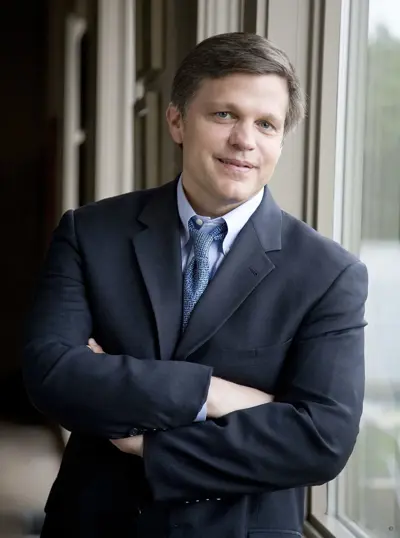
Douglas Brinkley is an American author, Katherine Tsanoff Brown Chair in Humanities and professor of history at Rice University. Brinkley is the history commentator for CNN, Presidential Historian for the New York Historical Society, and a contributing editor to the magazine Vanity Fair. He is a public spokesperson on conservation issues. He joined the faculty of Rice University as a professor of history in 2007.
