Zhang Zhidong Quotes
With foreign officials come foreign merchants, and with foreign merchants come foreign soldiers. They will usurp our authority and influence to begin with, and in the course of time, our guests will have become our hosts.
Chang, Chih-tung. China's Only Hope: An Appeal. Translated by Samuel I. Woodbridge, Fleming H. Revell Company, 1900.


Johansson is describing the origin of the word “hegemony.” During the 5th Century B.C. Athens and their allies formed the Delian League to combat the Persian Empire. Athens, as the most powerful city-state in Ancient Greece, controlled the alliance and the League soon turned into the Athenian “empire” or “hegemony.”

Samuel Langhorne Clemens, 1835-1910

The Newspaper acknowledged that the conquest of Mexico was tantamount to a rape, but the editors were convinced that the Mexicans would be very happy once they were in the American orbit. In almost every case in American history where we invaded and occupied a country, the political leadership, most of Congress, and many American citizens were convinced that American freedom and democracy were so much better than any other form of government that the conquered people would not only welcome the Americans but would voluntarily reorganize their governmental structures to have a democracy. While there were always some people in each country who did feel that way, the majority rarely did, much to American surprise.


In the Middle East, counties have often made bad deals or embarked upon damaging policies in order to appear to be strong. In that part of the world there is a firm belief that showing any weakness at all will invite many different forces to go after you. Iran has this vision of Islamic world leadership and if they so not appear to be very strong and powerful to the Muslim world, their aspirations will have been for naught.
When the British first colonized South Africa, the area they used was not inhabited or very sparcely so. However, some Black tribes (including the Zulus) were moving from the north and themselves were colonizing or annexing the sparcely populated areas to their kingdom. The British were most interested in Trading so did not have large land asperations. The Dutch white Boer Africanners, in contrast, wanted to farm the lands and use the range for their cattle. They wanted the land. The English policy was that there would be friendly relations with the Black tribes surrounding their Cape Colony and no one should take their land. However the Boers started attacking the Black areas and seizing their farms and villages. At first, the English assumed that the Blacks would easily be able to ward off the invasion as the Afrikanners had no professional troops like the British. However, the neighboring native tribes were not very warlike or good fighters. They were being overrun by the Zulus coming from the North and the Boers from the South. The British Government had a real problem in that they would have to have British soldiers fight the white Afrikanners if they wanted to stop the illegal white invasions. This was the root of the Boer War where the British would be fully at war with the Africanners.


Galloway, had campaigned against Blair and the Labor Party and had beaten the Labour MP in his district which was predominantly Muslim. He had been vehemently opposed to the Iraq War.


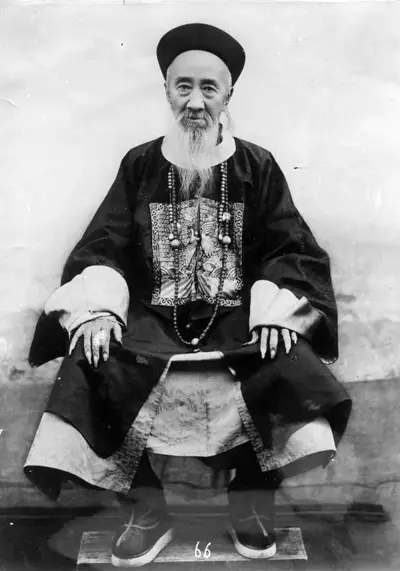
Zhang Zhidong (Chinese: 张之洞) was a Chinese official who lived during the late Qing dynasty. Along with Zeng Guofan, Li Hongzhang and Zuo Zongtang, Zhang Zhidong was one of the four most famous officials of the late Qing dynasty. Known for advocating controlled reform and modernization of Chinese troops, he served as the Governor of Shanxi Province and Viceroy of Huguang, Liangguang and Liangjiang, and also as a member of the Grand Council. He took a leading role in the abolition of the Imperial examination system in 1905. The Red Guards destroyed his tomb in 1966 during the Cultural Revolution. His remains were rediscovered in 2007 and reburied with honors.
